GI Pipe Weight Chart : Complete Guide to Galvanized Iron Pipe Weights

By |2025-11-19T12:57:59+05:30November 19th, 2025|Weight Chart|

In the construction and plumbing industry, accurate material planning can make the difference between project success and costly overruns. When working with galvanized iron pipes, understanding weight specifications becomes crucial for transportation, structural load calculations, and cost estimation. A comprehensive gi pipe weight chart serves as your essential reference tool for these critical decisions.

Whether you’re a contractor estimating materials for a water supply project or an engineer designing structural supports, knowing the exact weight per meter of different gi pipes directly impacts your project’s efficiency and budget. This guide provides everything you need to understand, read, and apply GI pipe weight charts effectively in your work.

GI Pipe Weight Chart Tables

To provide a practical reference, below are sample GI pipe weight charts for common pipe sizes and classes. These tables include outer diameter (OD), wall thickness, and weight per meter (kg/mtr) values based on standard IS specifications. Use these tables to quickly estimate pipe weights for your projects.

GI Pipe Weight Chart – Round Pipes (IS 1239 Part 1)

Nominal Size (inch) Outer Diameter (mm) Wall Thickness (mm) Class A Weight (kg/mtr) Class B Weight (kg/mtr) Class C Weight (kg/mtr)

1/2″

21.3 2.77 1.02 1.27 1.56
3/4″ 26.7 2.87 1.28 1.58

1.94

1″

33.4 2.87 1.78 2.27 2.73
1 1/4″ 42.2 3.25 2.46 3.11

3.79

1 1/2″

48.3 3.25 2.83 3.57 4.38
2″ 60.3 3.65 3.68 4.63

5.56

2 1/2″

73.0 4.00 4.83 6.05 7.30
3″ 88.9 4.00 5.87 7.35

8.87

4″

114.3 4.50 7.90 9.88 12.0
6″ 168.3 5.49 13.0 16.2

19.9

GI Pipe Weight Chart – Square Pipes (IS 1239 Part 1)

Size (mm)

Wall Thickness (mm) Weight per Meter (kg/mtr)
20 x 20 1.6

0.68

25 x 25

1.6 0.84
32 x 32 1.6

1.10

40 x 40

2.0 1.70
50 x 50 2.5

2.60

65 x 65

3.0 4.00
80 x 80 3.0

4.90

100 x 100

4.0 8.20
125 x 125 4.5

11.6

These tables reflect typical values and may vary slightly based on manufacturer tolerances, zinc coating thickness, and steel grade. Always refer to manufacturer-specific weight charts or verify actual pipe weights when precise calculations are critical.

Including square pipes in your planning is important, as they are widely used in structural frames and fabrication projects, where their weight per meter and moment of gyration are key design parameters.

If you require weight charts for other pipe types such as ERW pipes, or specific grades and finishes like mill cut finish, please request from your supplier or manufacturer directly.

What is a GI Pipe Weight Chart

A gi pipe weight chart functions as a reference table that displays the weight per meter for different pipe sizes, wall thickness variations, and class specifications. These standardized charts serve multiple purposes in construction and engineering projects, primarily helping professionals determine material requirements, calculate transportation costs, and plan structural support systems.

The weight chart typically presents measurements in kilograms per meter (kg/mtr) based on the outer diameter and wall thickness of the galvanized iron pipe. This standardization allows engineers and contractors to make precise calculations regardless of the manufacturer or supplier they choose for their projects.
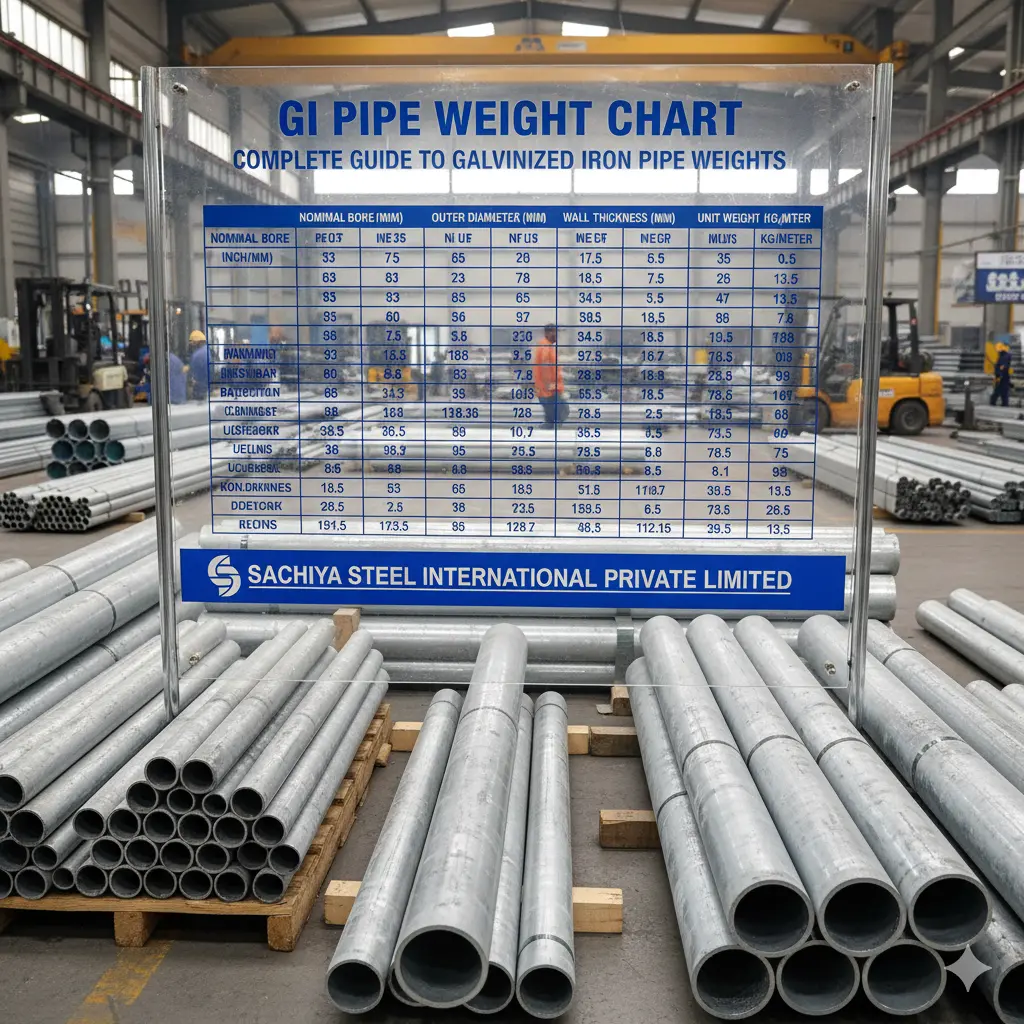
GI Pipe Weight Chart for Accurate Sizing and Pricing


As an essential tool for engineers, contractors, and suppliers, these charts eliminate guesswork from material estimation processes. When planning a large-scale water distribution project, for example, knowing that a 4-inch Class B gi pipe weighs approximately 12.2 kg/mtr helps determine total material weight, crane capacity requirements, and transportation logistics well before the first pipe arrives on site.

The charts also prove invaluable during procurement processes, where weight-based pricing requires accurate calculations to avoid budget surprises. Most manufacturers provide their own weight charts, but industry standards ensure consistency across different suppliers, making it easier to compare options and maintain quality standards.

How to Read GI Pipe Weight Charts

Understanding pipe nomenclature forms the foundation for reading any pipe weight chart effectively. The three critical measurements you’ll encounter are outer diameter (OD), inner diameter (typically calculated), and wall thickness (d thickness). These dimensions directly determine the pipe’s weight per meter and its suitability for different applications.

Most weight charts organize pipe sizes in inches, starting from smaller residential sizes like 1/2”, 3/4”, and 1”, progressing through commercial sizes like 1.25”, 2”, 3”, and 4”, up to large industrial diameter pipes of 6” and beyond. Each size corresponds to specific weight values across different pipe classes.

When reading weight values in kg/mtr for different pipe classes (A, B, C), remember that Class A represents light duty pipes with the thinnest walls, Class B covers medium duty applications, and Class C indicates heavy duty pipes with the thickest walls. The weight progression follows this pattern consistently across all pipe sizes.

Converting weight per meter to total pipe weight requires a simple multiplication: weight per meter × pipe length. For example, a 2” GI pipe Class B weighs 3.25 kg/mtr. For a 6-meter length, the total weight equals 3.25 kg/mtr × 6 meters = 19.5 kg total weight. This calculation becomes essential when planning transportation and determining handling requirements on site.

The chart format varies between manufacturers, but standard industry practice includes columns for nominal bore size, outer diameter in millimeters, wall thickness specifications, and corresponding weight values. Some charts also include additional information like internal surface area calculations and moment of gyration data for structural applications.

GI Pipe Weight Calculation Methods

The foundation of all gi pipe weight calculations rests on a formula that accounts for the steel material volume and its density. The standard calculation uses the outer diameter, wall thickness, and steel’s density of 7.85 grams per cubic centimeter to determine weight per meter.

The basic formula for weight calculation is: Weight = (OD – WT) × WT × 0.02466 kg/mtr, where OD represents outer diameter in millimeters, WT represents wall thickness in millimeters, and the constant 0.02466 converts the calculation to kg/mtr based on steel density.

For galvanized iron pipes specifically, you must consider additional weight from the zinc coating process. Hot-dip galvanizing typically adds 2-4% to the base mild steel pipe weight, as the zinc coating contributes approximately 85-110 grams per square meter of surface area. This seemingly small addition can significantly impact calculations for large projects.
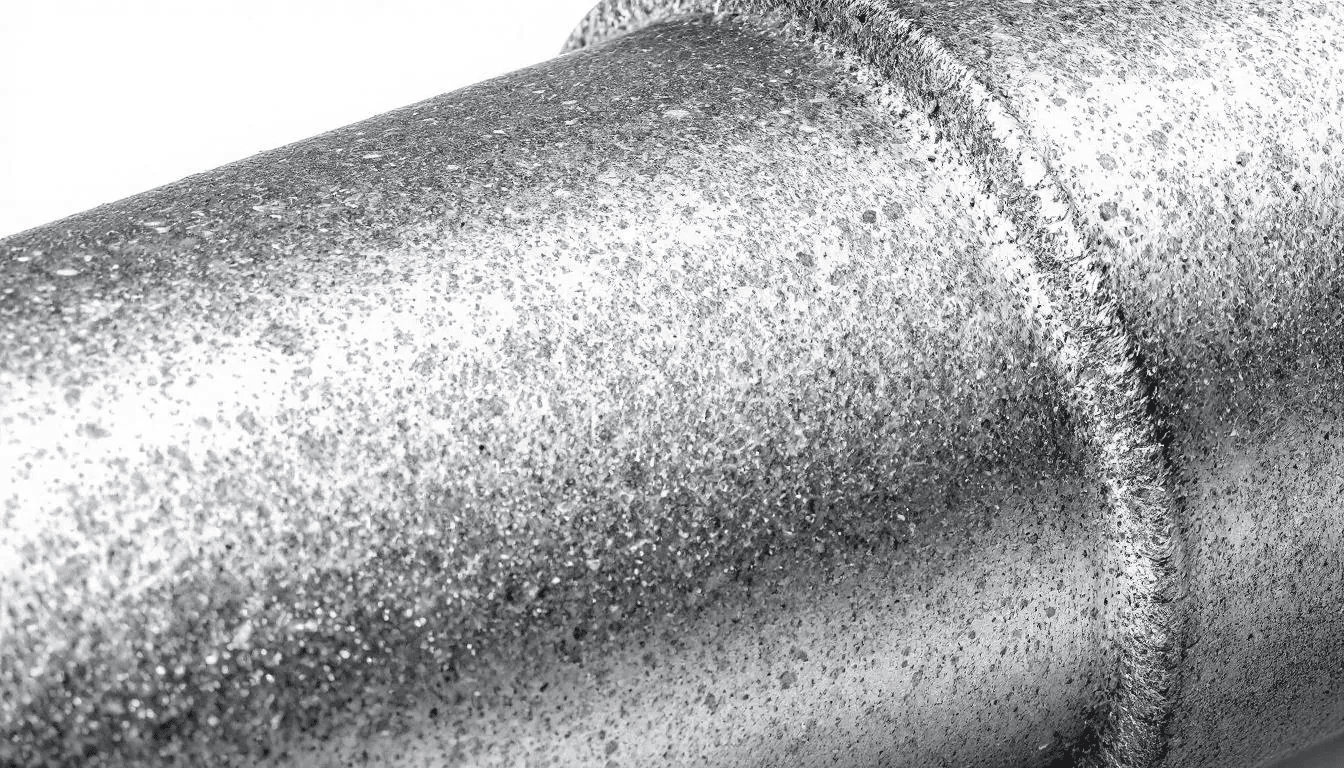
A close-up view of a galvanized iron pipe reveals its shiny zinc coating surface, highlighting the outer diameter and wall thickness. This image is essential for understanding the specifications and weight chart of gi pipes used in various plumbing applications.

Manufacturing standards include tolerance limits that affect final weight calculations. According to IS standards, medium and heavy tubes carry a tolerance of ±10%, while light duty pipes maintain ±8% tolerance. These tolerances must factor into calculations when precision matters, particularly for structural applications where load calculations require exact specifications.

When working with ready stock materials from suppliers, always verify actual weight against chart specifications. Manufacturing processes, quality control variations, and different material grade selections can result in weight differences that impact project planning and costs.

GI Pipe Classes and Weight Variations

Class A (Light Duty) GI Pipes

Class A galvanized iron pipes feature the thinnest wall thickness, resulting in the lowest weight per meter across all pipe sizes. These light duty pipes suit applications involving low-pressure water supply systems, domestic plumbing installations, and situations where structural loads remain minimal.

The weight characteristics of Class A pipes make them economical choices for residential projects and temporary installations. A 1/2” Class A pipe weighs approximately 1.02 kg/mtr, while a 1” pipe weighs around 1.78 kg/mtr, and a 2” pipe reaches 2.93 kg/mtr. This progression demonstrates how diameter increases significantly impact weight even in the lightest pipe class.

Despite their lighter construction, Class A pipes still provide adequate corrosion resistance through proper zinc coating application. However, their thinner walls make them less suitable for high-pressure applications or environments where external stress might compromise pipe integrity.

Class B (Medium Duty) GI Pipes

Class B pipes represent the most commonly used classification in general construction and plumbing works. With medium wall thickness specifications, these pipes balance cost, weight, and performance for moderate pressure applications across residential, commercial, and light industrial projects.

Weight specifications for Class B pipes demonstrate the impact of increased wall thickness: 1/2” weighs 1.27 kg/mtr, 1” reaches 2.27 kg/mtr, and 2” pipes weigh 3.25 kg/mtr. This represents roughly 20-25% more weight than equivalent Class A pipes, reflecting the additional steel material in thicker walls.

The versatility of Class B gi pipes makes them suitable for municipal water supply systems, building plumbing installations, and general construction applications where durability and pressure handling capability matter more than minimizing weight.

Class C (Heavy Duty) GI Pipes

Heavy duty Class C pipes feature the thickest wall construction, making them the heaviest option but also the most durable for demanding applications. Industrial facilities, fire fighting systems, and high-pressure installations typically specify Class C pipes for their superior strength and pressure handling capabilities.

The weight progression for Class C pipes reflects their robust construction: 1/2” pipes weigh 1.56 kg/mtr, 1” pipes reach 2.73 kg/mtr, and 2” pipes weigh 4.05 kg/mtr. This represents approximately 35-40% more weight than Class A equivalents, requiring stronger support systems and more substantial transportation planning.

When projects specify Class C pipes, factor in the additional weight for structural support calculations, crane capacity requirements, and transportation costs. The permissible axial compressive stress ratings for these heavy tubes also make them suitable for applications where pipes must bear structural loads beyond simple fluid transport.

GI vs MS Pipe Weight Comparison

Understanding the relationship between galvanized iron and mild steel pipe weights helps clarify pricing and specification decisions. The base weight calculation remains identical for both gi pipes and MS pipes sharing the same dimensions, with the galvanizing process adding the primary weight difference.

Galvanized iron pipes start as mild steel pipes that undergo hot-dip galvanizing, where zinc coating application adds approximately 2-4% to the original weight. This process involves dipping steel pipes in molten zinc, creating a protective layer that prevents oxidation and extends service life significantly.

The galvanizing process adds roughly 85-110 grams per square meter of coating, translating to small but measurable weight increases. For practical applications, a 2” Class B MS pipe weighing 3.25 kg/mtr becomes 3.35-3.40 kg/mtr after galvanizing, demonstrating the modest but consistent weight impact.
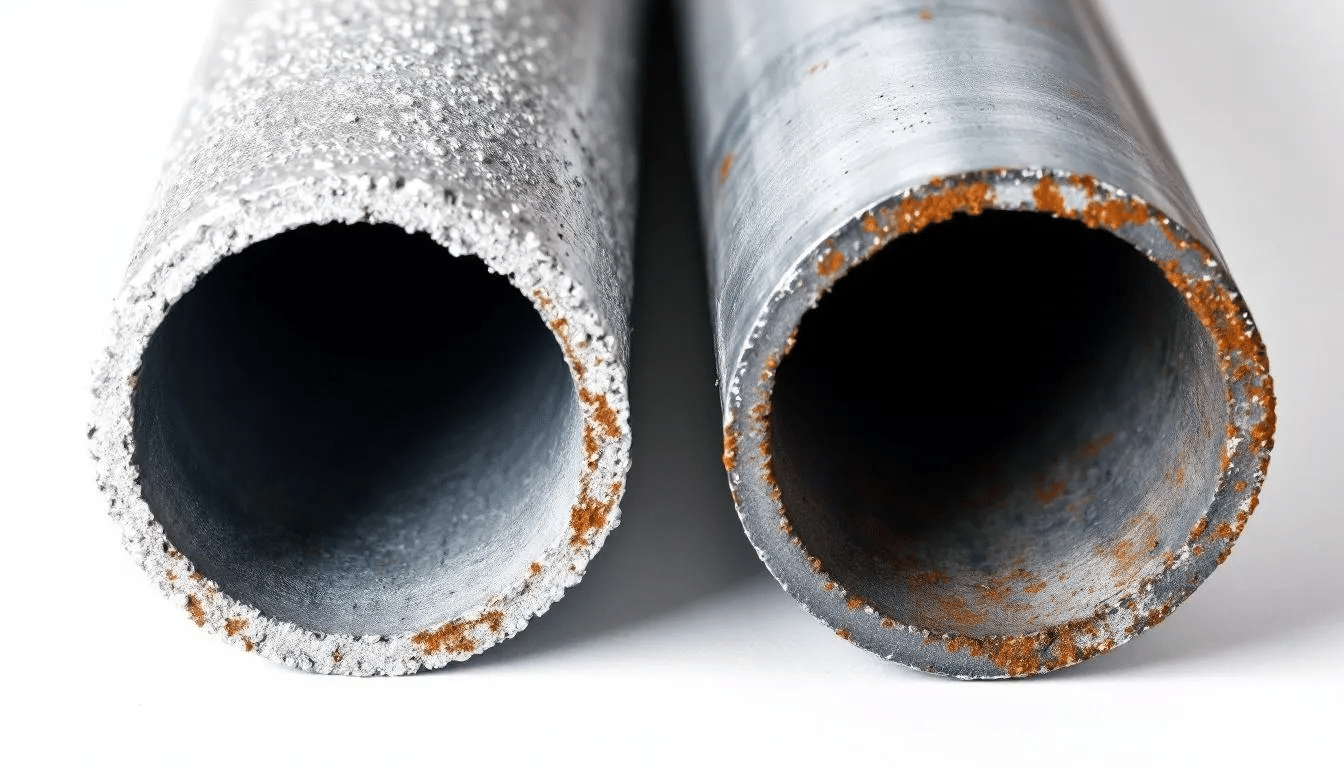
The image shows a side-by-side comparison of galvanized and uncoated steel pipes, highlighting their surface differences; the galvanized pipe features a shiny zinc coating that protects against corrosion, while the uncoated pipe has a duller finish. Both pipes are displayed with visible wall thickness and outer diameter measurements to illustrate their specifications.

This weight relationship becomes crucial for cost calculations, as suppliers often price materials by weight. Understanding that GI pipe weight includes both base steel material and zinc coating helps explain pricing differences and ensures accurate project budgets.

For long-distance transportation or projects involving thousands of meters of pipe, even small weight differences compound significantly. Calculate total project weight using final GI pipe specifications rather than base MS pipe weights to avoid transportation capacity miscalculations.

Indian Standards for GI Pipe Weights

IS 1239 (Part 1) establishes comprehensive specifications for steel tubes used in general engineering purposes, including detailed weight requirements for different pipe classes and sizes. This standard governs manufacturing tolerances, material grade specifications, and quality control procedures that directly impact final pipe weights.

IS 3589 standards specifically address ERW pipes designed for water and sewage applications, ensuring these pipes meet weight specifications appropriate for municipal and industrial fluid transport systems. These standards define wall thickness ranges, diameter tolerances, and corresponding weight calculations that manufacturers must follow.

The galvanizing process itself follows IS 4736 requirements, which specify hot-dip galvanized coating standards for iron and steel articles. This standard ensures consistent zinc coating application that affects final pipe weight and provides uniform corrosion protection across different manufacturers.

Bureau of Indian Standards (BIS) certification requirements mandate that manufacturers demonstrate compliance with weight specifications through regular testing and quality assurance procedures. This certification process helps ensure that pipe weight chart values accurately represent delivered materials.

International alignment with standards like ASTM A53 and BS EN 10255 allows Indian manufacturers to supply pipes meeting global specifications while maintaining domestic standard compliance. This dual compliance capability supports export opportunities while ensuring local project compatibility.

Factors Affecting GI Pipe Weight

Pipe diameter serves as the primary factor determining weight variations, with larger diameters requiring proportionally more steel material for equivalent wall thickness specifications. The relationship between diameter and weight follows mathematical principles where small diameter increases create significant weight changes.

Wall thickness variations significantly impact total weight calculations, as thicker walls require substantially more steel material per meter. The relationship isn’t linear – doubling wall thickness more than doubles the pipe weight due to the larger circumference of material at the outer diameter.

Manufacturing processes affect weight consistency, with seamless pipes typically showing tighter weight tolerances compared to ERW pipes. The welding process in ERW pipes can create slight variations in wall thickness along the seam, potentially affecting overall weight calculations for precise applications.

Quality control standards implemented during manufacturing directly influence how closely actual pipe weights match published chart specifications. Manufacturers with stringent quality control typically deliver pipes with weights within narrow tolerance ranges, while less controlled processes may show wider variations.
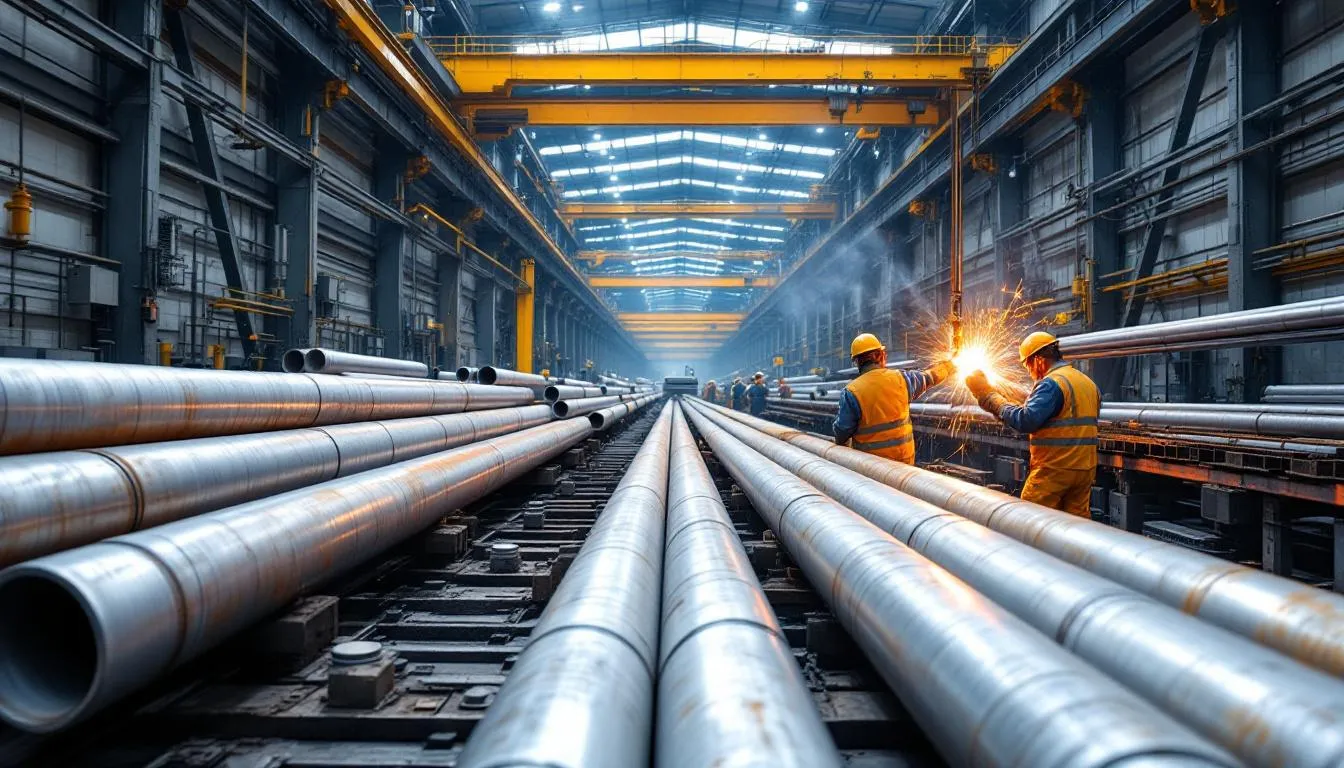
The image depicts a manufacturing facility where galvanized iron pipes, including ERW pipes and square hollow pipes, are in various stages of production. The scene showcases different sizes and grades of pipes, highlighting their wall thickness, outer diameter, and zinc coating, which are essential for determining their specifications and weight as per the gi pipe weight chart.

The steel grade and chemical composition of base material can create small weight variations even within the same specifications. Different steel compositions may have slightly different densities, affecting final weight calculations, though these differences typically fall within standard tolerances.

Practical Applications of GI Pipe Weight Charts

Material quantity estimation represents one of the most critical applications of pipe weight charts in construction projects. Contractors use these charts to calculate total material weights for transportation planning, determine storage requirements, and estimate handling equipment needs before project commencement.

Transportation planning relies heavily on accurate weight calculations to determine vehicle capacity requirements and shipping costs. When planning to transport 500 meters of 4” Class B GI pipes weighing 12.2 kg/mtr each, the total weight reaches 6,100 kg, requiring appropriate truck capacity and loading equipment.

Structural load calculations for pipe supports and foundations require precise weight data to ensure adequate support systems. Engineers design pipe racks, hangers, and foundations based on total distributed loads that include pipe weight, fluid weight, and safety factors.

Inventory management and warehouse storage planning depend on weight calculations to determine floor loading requirements, storage rack capacities, and material handling equipment specifications. Warehouse managers need these calculations to optimize storage layouts and ensure safe stacking practices.

Crane capacity requirements for lifting and installation work must account for pipe weights plus any lifting hardware. A crane installing 12-meter sections of 6” Class C pipes must handle weights exceeding 400 kg per section, requiring appropriate capacity and safety margins.

Quality control verification during material receipt involves weighing sample pipes to confirm they match specification requirements. Significant weight variations may indicate non-conforming materials or specification errors that could affect project performance.

Popular GI Pipe Brands and Their Weight Standards

Jindal Star gi pipes follow IS 1239 Part 1 weight specifications precisely, providing contractors with reliable weight consistency across different production batches. Their manufacturing process emphasizes tight tolerance control, ensuring that actual pipe weights closely match published chart values for accurate project planning.

Tata gi pipes maintain consistent weight tolerance compliance through advanced quality control systems and regular calibration of manufacturing equipment. Their weight certification process includes batch-wise testing to verify conformance with standard specifications, providing additional confidence for precision applications.

APL Apollo gi pipes meet international quality standards while maintaining compatibility with Indian specifications, allowing contractors to use their weight charts for both domestic and export projects. Their documentation typically includes detailed weight charts with tolerance specifications for each pipe class and size.

Essar Steel galvanized pipes provide accurate weight certification with each shipment, including batch-specific weight data that helps contractors verify material conformance. Their quality control process includes statistical sampling to ensure weight consistency across production runs.

Brand-specific weight charts available from manufacturers often provide more detailed information than generic industry charts, including specific tolerances, coating weights, and material certifications. When precision matters, consulting manufacturer-specific charts provides the most accurate weight data for project calculations.

Different manufacturers may show slight variations in weight due to different steel compositions, galvanizing processes, or quality control standards. For critical applications, specify both the pipe standard and manufacturer to ensure consistent weight characteristics throughout the project.

Understanding gi pipe weight charts empowers construction professionals to make informed decisions about material selection, transportation planning, and structural design. These charts serve as fundamental tools that bridge the gap between theoretical specifications and practical project requirements.

Accurate weight calculations prevent costly surprises during construction, ensure adequate equipment capacity, and support proper safety planning. Whether you’re estimating materials for a small plumbing repair or planning a major infrastructure project, reliable weight data forms the foundation for successful project execution.

For optimal results, always cross-reference weight chart data with manufacturer specifications and account for applicable tolerances in your calculations. This attention to detail ensures your projects proceed smoothly from planning through completion, with materials that meet both weight and performance expectations.
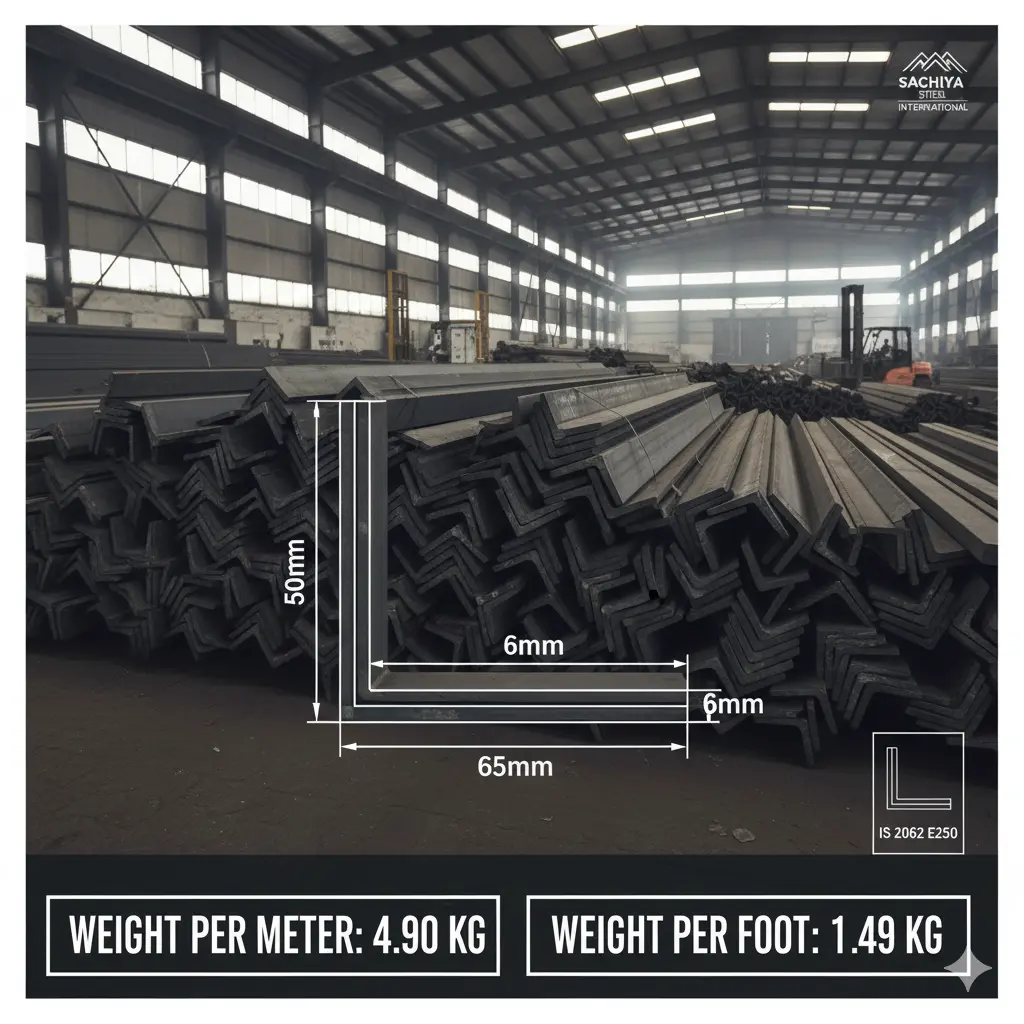

MS Angle Weight Chart : The Complete Guide (Equal & Unequal)

By |2025-11-15T16:33:14+05:30November 15th, 2025|Weight Chart|

As a leading manufacturer and exporter of high-quality steel products, Sachiya Steel International Private Limited understands the critical need for accurate technical data. For precise planning and fabrication, an accurate MS Angle Weight Chart is indispensable.MS (Mild Steel) Angles are one of the most fundamental components in fabrication, construction, and structural engineering.

This guide provides a comprehensive MS Angle Weight Chart for both equal and unequal MS angles, along with key technical specifications, to help you plan your project with precision.

Quick Jump Menu


MS Equal Angle Weight Chart

Equal angles have two sides (legs) of the same length. The size is represented as Side x Side x Thickness (e.g., 50x50x6). Below is the standard weight chart.

Size (mm) Thickness (mm) Weight (kg/meter) Weight (kg/foot)
25×25 3 1.10 0.34
25×25 5 1.80 0.55
40×40 3 1.80 0.55
40×40 5 3.00 0.91
40×40 6 3.50 1.07
50×50 5 3.80 1.16
50×50 6 4.50 1.37
60×60 6 5.40 1.65
65×65 5 4.90 1.49
65×65 6 5.80 1.77
65×65 8 7.70 2.35
75×75 6 6.80 2.07
75×75 8 8.90 2.71
75×75 10 11.00 3.35
90×90 6 8.20 2.50
90×90 8 10.80 3.29
90×90 10 13.40 4.08
100×100 8 12.10 3.69
100×100 10 14.90 4.54
100×100 12 17.70 5.39
150×150 12 27.20 8.29
150×150 16 35.80 10.91
200×200 16 48.50 14.78
200×200 20 60.00 18.29

MS Unequal Angle Weight Chart

Unequal angles have sides (legs) of two different lengths, ideal for specific structural applications. The size is represented as Leg A x Leg B x Thickness (e.g., 75x50x6).

Size (mm) Thickness (mm) Weight (kg/meter) Weight (kg/foot)
40×25 3 1.50 0.46
40×25 5 2.40 0.73
50×30 5 3.00 0.91
60×40 6 4.40 1.34
65×45 6 4.90 1.49
75×50 6 5.60 1.71
75×50 8 7.40 2.26
90×60 6 6.80 2.07
90×60 8 8.90 2.71
100×65 8 9.90 3.02
100×75 8 10.50 3.20
100×75 10 13.00 3.96
125×75 8 12.10 3.69
125×75 10 14.90 4.54
150×75 10 16.90 5.15
150×115 10 20.00 6.10
200×100 10 22.80 6.95
200×150 12 31.80 9.69

Note: The weights listed in this MS Angle Weight Chart are theoretical. Actual weight may vary based on rolling tolerances. For mission-critical applications or to discuss specific requirements for all our steel products, including MS Channels and MS Beams, always confirm with our official Material Test Certificates (MTC) or contact our sales team directly.


MS Angle Weight Chart

Understanding MS Angles: Grades & Standards

To ensure you are sourcing the correct product, it’s important to understand the standards.

1. Grades (IS 2062: E250)

The most common grade for MS Angles in India is IS 2062: E250. This is a structural steel standard that guarantees a minimum yield strength of 250 megapascals (MPa). This grade ensures reliability and strength for load-bearing structures. Sachiya Steel International supplies angles in all major grades, including IS 2062 E250 (A, B, C), E300, E350, and more.

2. Key Specifications

3. Manufacturers

We stock and supply MS Angles from leading primary manufacturers like SAIL (Steel Authority of India Limited) and RINL (Vizag Steel), as well as from various approved secondary mills to provide you with a full range of options to fit your budget and technical requirements.


Quick Conversion Table

Need to convert units quickly? Use this simple reference.

Unit Equivalent
1 Meter 3.2809 Feet
1 Foot 0.3048 Meter
1 Inch 25.4 mm
1 Kilogram (kg) 2.2046 Pounds (lbs)

Frequently Asked Questions (FAQ)

How do you calculate the weight of an MS Angle?

You can calculate the approximate weight of an MS Angle using the following formula: Weight (kg/meter) = (Leg 1 + Leg 2 - Thickness) X Thickness X 0.00785 1) Leg 1 & 2 are in mm 2) Thickness is in mm 3) 0.00785 is the density factor for mild steel (7850 kg/m³) Example for 50x50x6 Angle: (50 + 50 - 6) X 6 X 0.00785 = 94 X 6 X 0.00785 = 4.42 kg/meter (Note: The chart value of 4.50 kg/m accounts for the fillet radius at the corner, making it more accurate.)

What is the weight of a 50x50x6 angle per meter?

The standard theoretical weight of a 50x50x6 MS Angle is 4.50 kg per meter.

What is the weight of a 65x65x6 angle per meter?

The standard theoretical weight of a 65x65x6 MS Angle is 5.80 kg per meter.


Your Trusted Partner for All Steel Needs

At Sachiya Steel International Private Limited, we are more than just a supplier; we are your structural partners. With a massive inventory of MS Angles, Channels, Beams, and Plates, we are prepared to handle orders of any size.

Why Choose Us?

  • Vast Inventory: We stock a complete range of equal and unequal angles.

  • Guaranteed Quality: All materials are supplied with an MTC and conform to IS 2062 standards.

  • Global Exporter: We have extensive experience exporting to all major ports worldwide.

  • Expert Team: Our knowledgeable staff is ready to help you find the exact specifications you need.

Contact Us Today for a Quote

Get in touch with our expert team for your domestic or export requirements.

  • Phone: +91 9769056007

  • Email: [email protected] / [email protected]

  • Office Address: Office No 102, 1st Floor, Prasad Chambers, Tata Rd No 2, near ROXY CINEMA, Charni Road East, Opera House, Girgaon, Mumbai, Maharashtra 400004

MS Chequered Plate Weight Per Square Meter : The Complete Guide

By |2025-11-14T16:19:48+05:30November 14th, 2025|Plates|

Understanding the weight of MS Chequered Plate is a critical factor for any project, influencing everything from structural design and load-bearing capacity to shipping costs and budget estimation.

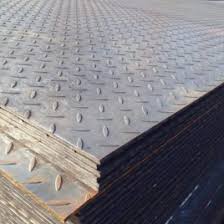
In India, these plates are widely known as “Chakkar Plate” or “Chq Plate,” while internationally, you’ll hear them called Tread Plate or “Diamond Plate.” Regardless of the name, their function is the same: to provide a durable, anti-skid surface for flooring, stairs, and walkways.

As a premier manufacturer and exporter, Sachiya Steel International Private Limited has created this definitive guide to provide you with the accurate data you need. Here, you will find a precise weight calculator, comprehensive charts, and clear specifications.


MS Chequered Plate Weight Calculator

For a quick and accurate calculation of your total requirement, use our interactive weight calculator. Simply enter your dimensions to get the total weight instantly. This tool uses industry-standard nominal weights for the highest accuracy.

MS Chequered Plate Weight Calculator


Total Estimated Weight:

0.00 kg

MS Chequered Plate Weight Per Square Meter (kg/m²)

This chart is the fastest way to find the unit weight for standard MS chequered plate thicknesses. The “Nominal Weight” is the accepted industry standard, which includes the weight of the base plate plus the raised pattern.

Thickness (mm) Nominal Weight (kg/m²)
3 mm 26.55 kg/m²
4 mm 34.40 kg/m²
5 mm 42.25 kg/m²
6 mm 50.10 kg/m²
8 mm 65.80 kg/m²
10 mm 83.40 kg/m²
12 mm 100.60 kg/m²

MS Chequered Plate Weight Per Square Meter

How to Calculate MS Chequered Plate Weight (Formula)

While charts are fast, you may need to understand the basic formula. The weight of any steel plate is its volume multiplied by its density.

  • Density of Mild Steel (MS): 7850 kg/m³

A simple formula for a flat MS plate is:

Weight (kg) = Area (m²) × Thickness (mm) × 7.85

Why This Formula Can Be Misleading

If you use this formula for a 6mm plate:

1 m² × 6 mm × 7.85 = 47.1 kg

Notice this is less than the 50.10 kg/m² in our chart. Why?

The formula calculates the weight of the flat base plate only. It does not include the extra material used to create the raised “chequers” or “diamonds.” The Nominal Weight (50.10 kg/m²) is the correct, accepted weight to use for all project planning and costing.


Nominal vs. Theoretical Weight: A Key Comparison

This table clarifies the difference. “Theoretical Weight” is the simple formula for a flat plate, while “Nominal Weight” is the industry-standard weight for the finished chequered plate.

Thickness (mm) Theoretical Weight (kg/m²) (Flat Plate Only) Nominal Weight (kg/m²) (Chequered Plate)
3 mm 23.55 kg/m² 26.55 kg/m²
4 mm 31.40 kg/m² 34.40 kg/m²
5 mm 39.25 kg/m² 42.25 kg/m²
6 mm 47.10 kg/m² 50.10 kg/m²
8 mm 62.80 kg/m² 65.80 kg/m²
10 mm 78.50 kg/m² 83.40 kg/m²
12 mm 94.20 kg/m² 100.60 kg/m²

MS Chequered Plate Specifications

As a leading supplier, Sachiya Steel International provides plates that meet stringent international standards.

Attribute Specification
Grades IS 2062 (E250, E350), ASTM A36, BS4360 43A
Standard Thickness 3 mm to 12 mm
Standard Width 1250 mm, 1500 mm, 2000 mm
Standard Length 2500 mm, 5000 mm, 6000 mm
Technique Hot Rolled (HR)
Patterns 5-Bar (Lentil) & 1-Bar (Teardrop / Diamond)
Applications Industrial Flooring, Stair Treads, Truck Beds, Ramps

Weight of a Standard 4×8 Steel Diamond Plate

“4×8” (4 feet by 8 feet) is a very common plate size, especially in the US market. This chart shows the weight per sheet.

(Note: 1 foot = 0.3048 meters. A 4×8 ft plate is 1.219m x 2.438m ≈ 2.97 m²)

Thickness Weight per 4×8 Sheet (kg)
3 mm ~ 78.9 kg
5 mm ~ 125.5 kg
6 mm ~ 148.8 kg
8 mm ~ 195.4 kg

Chequered Plate Weight Per Square Foot (lbs)

For our international clients or projects using imperial units, this table converts the weight to pounds (lbs) per square foot.

Thickness (Inches) Approx. Thickness (mm) Weight (lbs / sq. ft)
1/8″ 3.175 mm ~5.4 lbs
3/16″ 4.76 mm ~7.0 lbs
1/4″ 6.35 mm ~9.2 lbs
3/8″ 9.525 mm ~13.5 lbs
1/2″ 12.7 mm ~17.1 lbs

Why Choose Sachiya Steel International?

When sourcing MS Chequered Plates, quality, accuracy, and reliability are paramount.

Sachiya Steel International Private Limited is not just a stockholder; we are a premier manufacturer, supplier, and exporter based in Mumbai, India.

  • Certified Quality: We provide MS Chequered Plates conforming to IS 2062 and other international standards, complete with Mill Test Certificates (MTC).

  • Large Inventory: We maintain a massive stock of all common sizes and thicknesses for immediate dispatch.

  • Custom Cutting: We offer precision cutting services to match your exact project dimensions, saving you time and reducing waste.

  • Global Export: We have a proven track record of exporting our products worldwide, with all logistics and documentation handled by our expert team.

Don’t let guesswork define your project. Get the exact materials you need with the certified quality you deserve.

For the latest prices, a custom quote, or technical advice, contact our expert team today.

  • Phone: +91 9769056007

  • Email: [email protected] / [email protected]

  • Address: Office No 102, 1st Floor, Prasad Chambers, Tata Rd No 2, Opera House, Girgaon, Mumbai, Maharashtra 400004


What is the weight of 6mm chequered plate?

The standard nominal weight of a 6mm MS chequered plate is 50.10 kg per square meter. A full 8ft x 4ft (1.2m x 2.4m) sheet of 6mm chequered plate weighs approximately 148.8 kg.

What is the unit weight of 8mm chequered plate?

The unit weight (or weight per square meter) of an 8mm MS chequered plate is 65.80 kg/m².

What is the difference between chequered plate and tread plate?

There is no difference. "Chequered Plate" (and "Chakkar Plate" in India) and "Tread Plate" (or "Diamond Plate" in the USA) are different regional names for the same product—a steel plate with a raised pattern to provide anti-skid properties.

What is the weight of 5mm chequered plate?

The nominal weight of a 5mm MS chequered plate is 42.25 kg per square meter.

Split Flange: Complete Guide to Two-Piece Flange Systems

By |2025-11-06T16:05:23+05:30November 6th, 2025|Flanges|

When existing pipe systems need flange connections without cutting or welding, split flanges provide the ideal solution. These innovative two-piece systems revolutionize how maintenance teams and engineers approach piping modifications, offering a secure connection method that eliminates the time and cost associated with traditional welding operations.

Split flanges have become essential components across industries ranging from chemical processing to automotive exhaust repairs. Their unique design allows for easy installation on existing piping without the need for specialized welding tools or extensive system shutdowns. Whether you’re dealing with glass lined reactors, exhaust pipe modifications, or hydraulic system maintenance, understanding split flange technology can significantly improve your operational efficiency.

This comprehensive guide covers everything you need to know about split flange systems, from basic construction principles to advanced selection criteria and troubleshooting techniques.

What is a Split Flange

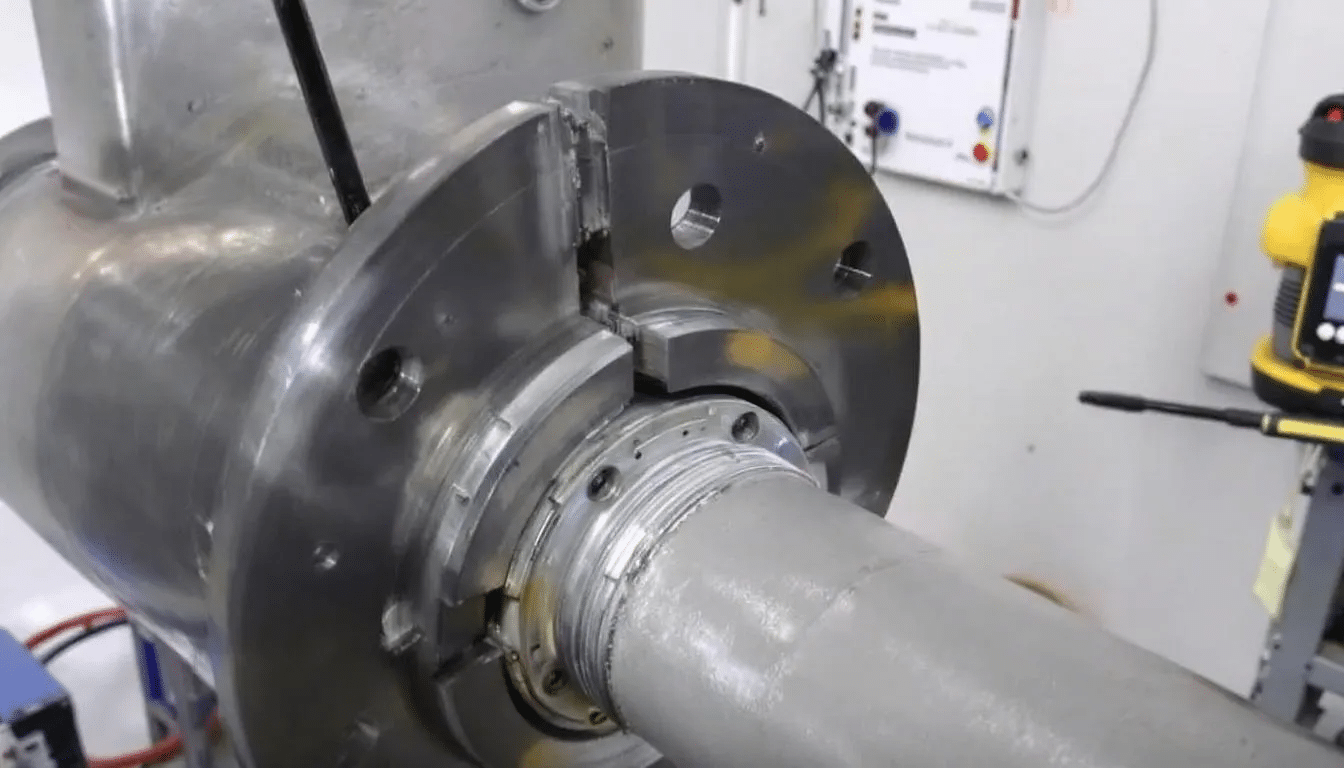
A split flange is a two-piece flange system that bolts together around pipes, eliminating the need for welding or cutting existing piping. Unlike traditional one-piece flanges that require pipe modifications for installation, split flanges consist of two interlocking halves that can be positioned around existing pipes and secured with nuts and bolts.

The image depicts a split flange assembly, with two halves being carefully positioned around an exhaust pipe, showcasing the mild steel construction. This setup is ideal for creating a secure connection and requires welding for installation, making it suitable for various automotive applications.

The basic construction involves two identical halves that feature precision-machined surfaces designed to create a tight seal when bolted together. Each half contains bolt holes that align perfectly when the pieces are assembled, allowing for consistent clamping force distribution around the entire circumference of the pipe.

The key advantage of split flanges lies in their ability to provide easy installation and removal for maintenance access. This design feature makes them particularly valuable in situations where system downtime must be minimized or where access to pipe ends is restricted. Maintenance teams can install or remove split flanges without disconnecting lengthy pipe sections or disturbing adjacent equipment.

The gasket system in split flanges typically uses compressed sealing materials that conform to the mating surfaces, creating a leak-resistant connection suitable for various pressure and temperature applications. This sealing mechanism ensures reliable performance while maintaining the ability to disassemble the connection when needed.

Types of Split Flanges

Split flange systems are available in several configurations designed to meet specific industry requirements and applications. Each type offers unique features and specifications tailored to particular operating conditions and installation requirements.

ANSI 150 Split Flanges

ANSI 150 split flanges represent a widely used standard in industrial applications, available in sizes from 1½” to 4” with maximum operating pressure of 150 PSI. These flanges are designed to meet ANSI Class 150 pressure and temperature specifications, making them suitable for a broad range of industrial processes.

The ANSI 150 specification ensures compatibility with grooved adapters and raised face flanged components commonly found in process piping systems. These flanges are typically supplied with Buna gaskets and couplers upon customer request, providing a complete connection solution.

Key specifications for ANSI 150 split flanges include:

Size

Maximum Pressure Bolt Pattern Weight (lbs)
1½” 150 PSI 4-bolt

2.5

2”

150 PSI 4-bolt 3.2
3” 150 PSI 4-bolt

5.8

4”

150 PSI 8-bolt

8.7

The threaded and blind configurations available in this series provide flexibility for different connection requirements. Threaded configurations allow for direct connection to threaded pipe systems, while blind configurations are ideal for applications requiring a flat, sealed surface.

Automotive Exhaust Split Flanges

Automotive exhaust split flanges are specifically designed for exhaust system repairs and modifications. Common sizes include 2 inch and 2.5 inch flat oval designs that accommodate standard exhaust pipes found in most vehicles.

These flanges are available in multiple materials to suit different performance and budget requirements:

  • Mild steel: Cost-effective option for basic repair applications
  • Stainless steel: Enhanced corrosion resistance for high-performance applications
  • Galvanized steel: Balanced approach offering improved rust protection over mild steel

The 2.25 inch (57mm) size is particularly popular for European vehicle applications, fitting standard exhaust pipe diameters commonly found in this market. Installation hardware typically includes Allen bolts for secure mounting, providing reliable clamping force even under the vibration and thermal cycling conditions typical in automotive applications.

Automotive split flanges eliminate the need for welding exhaust pipes, making them ideal for quick repairs in professional shops or DIY maintenance. This capability is particularly valuable when connecting catalytic converters, mufflers, or other exhaust components without damaging heat-sensitive parts through welding operations.

Applications and Industries

Split flange systems serve critical roles across diverse industrial sectors, each leveraging the unique installation and maintenance advantages these components provide. The versatility of split flange designs makes them suitable for applications ranging from high-purity chemical processing to heavy-duty automotive repairs.

Glass lined piping systems in chemical and pharmaceutical industries represent one of the most demanding applications for split flanges. These systems require connections that maintain the integrity of the glass lining while providing reliable sealing under corrosive conditions. Split flanges allow maintenance teams to service these systems without damaging the delicate glass surfaces that traditional welding might compromise.

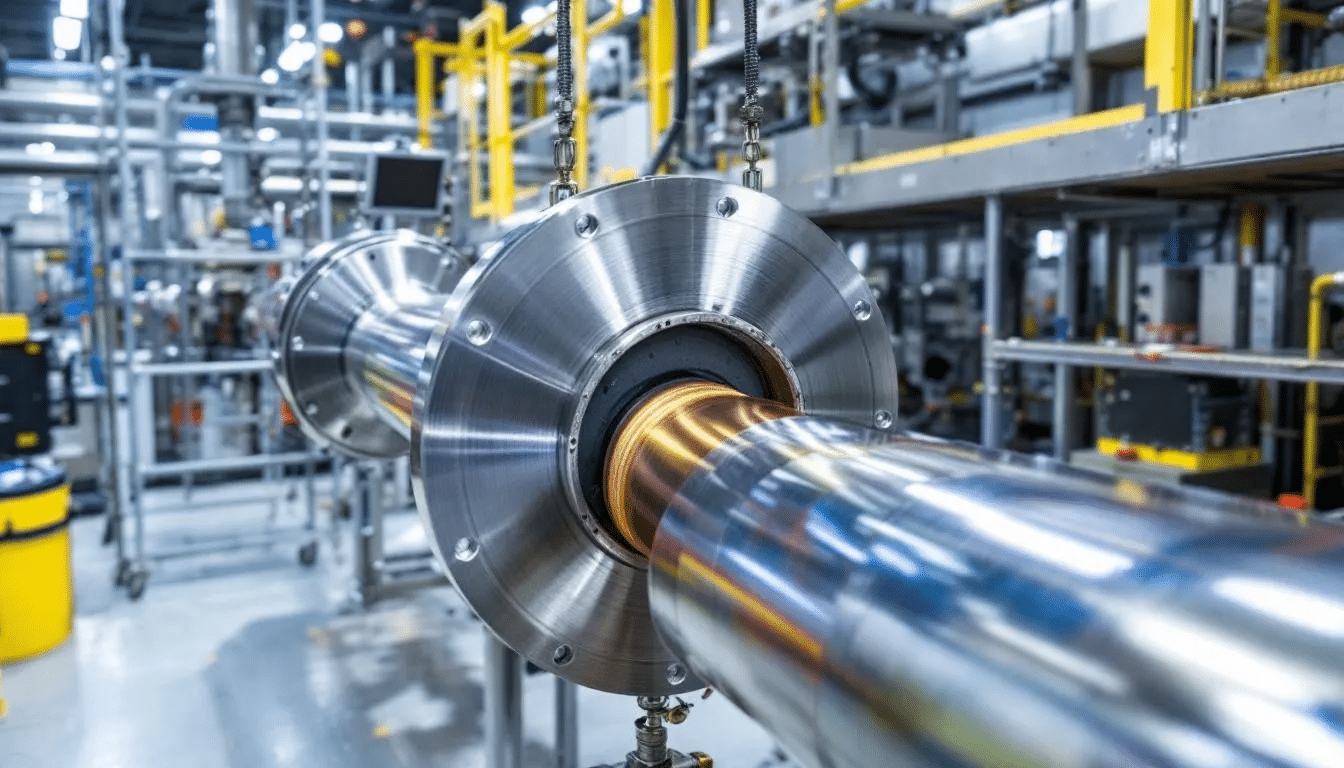
The image depicts the installation of industrial split flanges on a glass-lined chemical processing pipe, showcasing the secure connection using bolts and nuts. The flanges are designed for easy maintenance and corrosion resistance, ideal for various applications in chemical processing systems.

In automotive applications, split flanges have become the standard solution for exhaust system repairs. They provide a reliable method for connecting catalytic converters, exhaust pipes, and muffler systems without the heat damage that welding can cause to sensitive emission control components. This application is particularly important in modern vehicles where precise exhaust gas management is critical for emissions compliance.

Machine tools, steel, textile, and petrochemical industries utilize split flanges in hydraulic systems that require frequent maintenance access. These applications often involve high-pressure fluid systems with BSP, NPT, UNF, JIC, and SAE flange connections where traditional welded joints would create maintenance challenges.

The food and beverage industry also benefits from split flange technology, particularly in sanitary piping systems where easy disassembly for cleaning is essential. The ability to remove and reinstall connections without welding helps maintain the hygienic standards required in these applications while reducing cleaning time and complexity.

Materials and Specifications

Material selection for split flanges plays a crucial role in determining their performance, longevity, and suitability for specific applications. The choice of material affects not only the mechanical properties but also the corrosion resistance and cost-effectiveness of the installation.

SS 304 stainless steel represents the premium material choice for split flanges, offering excellent corrosion resistance in harsh chemical environments. This austenitic stainless steel grade provides superior resistance to a wide range of chemicals, making it ideal for pharmaceutical, food processing, and chemical manufacturing applications. The material maintains its properties across a broad temperature range and resists both uniform and localized corrosion.

Mild steel options provide cost-effective solutions with adequate durability for many industrial applications. While not offering the corrosion resistance of stainless steel, mild steel split flanges are suitable for dry environments or applications where cost considerations outweigh corrosion concerns. These flanges often receive protective coatings to enhance their service life.

Galvanized steel coatings offer enhanced rust and corrosion protection compared to uncoated mild steel. The zinc coating provides sacrificial protection, extending the service life of the flange in moderately corrosive environments. This material choice represents a balanced approach between cost and corrosion resistance.

Technical Specifications

PN 16 pressure ratings ensure compliance with European standards, making these flanges suitable for international applications. The PN 16 designation indicates a nominal pressure rating of 16 bar (approximately 232 PSI), providing adequate pressure capability for many industrial processes.

Detailed dimension tables cover pipe, flange, and bolt specifications in both mm and inches, ensuring compatibility with various international piping standards. These specifications include critical dimensions such as:

  • Bolt circle diameter
  • Bolt hole diameter and quantity
  • Flange thickness and outer diameter
  • Gasket groove dimensions (where applicable)

Weight specifications and bolt hole patterns facilitate proper installation planning and structural support requirements. Understanding these specifications helps engineers determine the appropriate support systems and installation procedures for different applications.

Flat face and raised face configurations accommodate different sealing requirements. Flat face designs provide uniform contact pressure across the entire gasket surface, while raised face configurations concentrate sealing pressure on a smaller area, often providing superior sealing performance.

Dust-inhibiting paint finishes on ductile iron bodies extend service life by protecting against environmental corrosion. These protective coatings are particularly important in outdoor installations or environments with high humidity or chemical exposure.

Installation Advantages

The primary advantage of split flanges lies in their ability to install on existing pipe systems without welding or cutting requirements. This capability transforms maintenance operations by eliminating the need for hot work permits, specialized welding equipment, and the associated safety protocols required for welding operations.

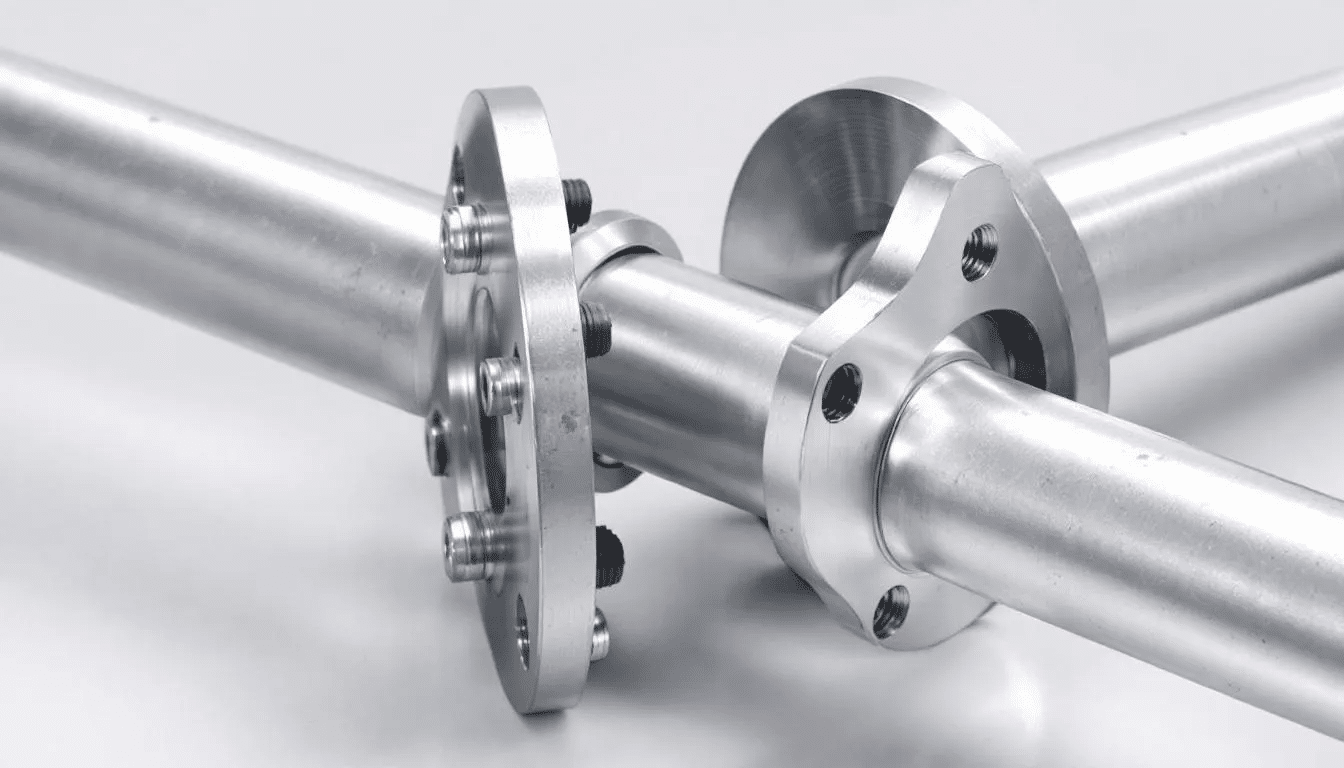
The image shows a split flange being installed on an existing exhaust pipe system without the need for welding, using bolts and nuts for a secure connection. This method is ideal for maintenance and repairs, as it allows for easy assembly and disassembly while minimizing damage to the pipe.

Reduced labor costs and installation time compared to traditional flanges create significant economic benefits. Installation teams can complete split flange installations in a fraction of the time required for welded connections, reducing both direct labor costs and system downtime. This time savings is particularly valuable in continuous process industries where production interruptions are costly.

Easy access for maintenance, inspection, and component replacement represents another key advantage. Split flanges can be removed and reinstalled multiple times without degrading their sealing performance, enabling routine maintenance that would be impossible with welded connections. This capability is essential in applications requiring regular inspection or component replacement.

Professional installation is recommended for optimal performance and safety, particularly in high-pressure or critical applications. While split flanges are designed for straightforward installation, proper torque specifications and gasket selection require technical expertise to ensure reliable operation.

The elimination of heat-affected zones that occur with welding prevents metallurgical changes in the base pipe material. This advantage is particularly important in applications involving heat-sensitive materials or where maintaining specific material properties is critical for process performance.

Selection Guide

Selecting the appropriate split flange requires careful consideration of operating conditions, system requirements, and installation constraints. The selection process should begin with a thorough evaluation of the application requirements and operating environment.

Operating pressure requirements represent the primary selection criterion. For ANSI applications, the 150 PSI rating covers many industrial processes, but higher pressure applications may require specialized designs or alternative connection methods. It’s essential to include safety factors and consider pressure spikes that may occur during system operation.

Matching pipe diameter with appropriate flange size ensures proper fit and sealing performance. The available range of 1½” to 4” covers most standard industrial piping applications, but custom sizes may be required for specialized systems. Accurate measurement of existing pipe outer diameter is crucial for proper flange selection.

Material selection should be based on corrosion resistance needs and budget considerations. The decision matrix should consider:

  • Chemical compatibility with process fluids
  • Temperature exposure during operation
  • Environmental conditions (humidity, salt spray, etc.)
  • Required service life and maintenance intervals
  • Total cost of ownership including replacement cycles

Compatibility verification with existing flange standards and gasket requirements prevents installation problems and ensures reliable sealing. Different flange standards may have varying bolt patterns, gasket grooves, or sealing surface finishes that affect compatibility.

Maintenance and Troubleshooting

Regular inspection protocols ensure continued reliable performance of split flange connections. Inspection should focus on areas where problems typically develop, including bolt tension, gasket condition, and flange surface integrity.

Visual inspection for rust, leaks, and visible damage should be conducted during routine maintenance intervals. Pay particular attention to areas where corrosion typically initiates, such as bolt holes, gasket grooves, and areas where dissimilar materials are in contact. Early detection of corrosion allows for corrective action before failure occurs.

Proper bolt torque specifications prevent leaks and ensure secure connections throughout the service life. Under-tightening can result in gasket compression loss and subsequent leakage, while over-tightening may damage the gasket or flange faces. Use calibrated torque tools and follow manufacturer specifications for consistent results.

Gasket replacement intervals should be based on operating conditions and material compatibility. Factors affecting gasket life include:

  • Temperature cycling frequency and magnitude
  • Chemical exposure and compatibility
  • Pressure cycling and magnitude
  • Vibration levels and frequency

Common Issues and Solutions

Leak prevention requires proper gasket selection and surface preparation. The most effective approach involves matching gasket material to the specific application requirements and ensuring that flange faces are clean and undamaged before assembly.

Corrosion protection strategies become critical in harsh operating environments. Options include:

  • Protective coatings on carbon steel components
  • Material upgrades to stainless steel or other corrosion-resistant alloys
  • Environmental controls to reduce moisture and chemical exposure
  • Regular cleaning and maintenance schedules

Bolt replacement procedures address worn or damaged fasteners that can compromise connection integrity. Replacement bolts should match the original specifications for material, strength, and dimensions. In corrosive environments, consider upgrading to more corrosion-resistant bolt materials.

Signs of failure requiring immediate attention include excessive noise from the connection area, visible damage to flange components, and loose connections that cannot be corrected by proper torquing. When these conditions occur, evaluate whether repair is feasible or if complete replacement is necessary.

The decision between replacement and repair depends on the extent of damage, criticality of the application, and cost considerations. Minor surface corrosion may be addressed through cleaning and protective coating application, while significant mechanical damage typically requires component replacement.

Regular maintenance schedules tailored to the specific application and operating environment help prevent unexpected failures and extend component life. These schedules should consider the manufacturer’s recommendations, industry best practices, and site-specific operating conditions to optimize maintenance intervals and procedures.

Split flange systems continue to prove their value across industries by providing reliable, maintainable connections that eliminate the need for welding while delivering secure, leak-resistant performance. Their versatility in materials, sizes, and configurations ensures suitable solutions for virtually any piping application requiring removable flange connections.

MS Square Pipe Weight Chart: Free PDF & Calculation Guide (2025)

By |2025-10-13T16:33:30+05:30October 13th, 2025|Weight Chart|

MS Square Pipe Weight Chart & Calculation: The Definitive Guide for Structural Integrity

For structural and procurement professionals, having the most accurate MS Square Pipe Weight Chart is non-negotiable for project safety and cost control. The theoretical weight of a Square Hollow Section (SHS), commonly known as an MS square pipe, is the single most critical factor for precise load-bearing calculations and material procurement planning. This definitive guide provides the exact formula, an extensive weight chart based on Indian Standards (IS), and essential insights into why precise weight measurement—and trusted sourcing—is vital for your success.

The MS Square Pipe Weight Calculation Formula

The theoretical weight of an MS square pipe is derived from its volume and the density of the mild steel. This calculation determines the weight per linear meter () for a given size and thickness.

The Fundamental Formula

The weight of a square pipe per meter is calculated using the following engineering formula:

Step-by-Step Calculation Breakdown

The Cross-Sectional Area is the area of the steel material itself, which is the Outer Area minus the Inner Hollow Area.

For an MS Square Pipe (SHS), where is the outer side length (in meters) and is the wall thickness (in meters):

  1. Outer Area (m²):
  2. Inner Area (m²):
  3. Cross-Sectional Area (m²):
  4. Density of Mild Steel (): (Standard approximation)

Example Calculation (40×40 mm, 3.0 mm thick):


MS Square Pipe Weight Chart

2. Comprehensive MS Square Pipe Weight Chart (IS 4923)

The following chart provides the theoretical weight per meter (in ) for common Mild Steel Square Hollow Sections (SHS), conforming to the dimensional requirements of IS 4923 structural steel standards.

Size (A x A) in Thickness (T) in Weight () Size (A x A) in Thickness (T) in Weight ()
20 x 20 2.0 1.12 80 x 80 3.0 7.22
25 x 25 2.5 1.74 80 x 80 5.0 11.70
30 x 30 3.0 2.51 80 x 80 6.3 14.40
40 x 40 2.5 2.92 90 x 90 3.6 9.72
40 x 40 3.2 3.66 100 x 100 4.0 12.00
40 x 40 4.0 4.46 100 x 100 5.0 14.80
50 x 50 3.0 4.39 100 x 100 6.3 18.40
50 x 50 4.0 5.72 100 x 100 8.0 22.90
50 x 50 5.0 6.97 120 x 120 5.0 18.00
60 x 60 3.0 5.34 150 x 150 6.3 28.30
60 x 60 4.0 6.97 200 x 200 8.0 48.00

Data sourced from standard published tables aligned with IS 4923. Minor variations may occur based on manufacturer-specific tolerances.


3. Beyond the Chart: Real-World Weight Factors

The theoretical weight is a crucial starting point, but procurement professionals must account for real-world manufacturing and material variances.

A. Importance of IS 4923 Grade and Standard

For structural applications in India, MS square pipes must adhere to IS 4923: Specification for Steel Hollow Sections for Structural Use. This standard defines critical properties, including:

IS 4923 Grade Min. Yield Strength (MPa) Core Application
YST 210 210 General purpose and light construction.
YST 240 240 Medium structural applications.
YST 310 310 High-strength heavy construction and industrial machinery.
YST 355 355 Highly demanding, high-load structural frameworks.

The grade affects material density, which can slightly alter the final theoretical weight. Always specify the IS grade required for your engineering needs.

B. Understanding Weight Tolerances

No manufacturing process is perfect. Indian Standards (IS 4923) legally permit a degree of variance between the theoretical and the actual (measured) weight of the pipe.

Dimension/Property Permitted Tolerance (IS 4923) Impact on Weight
Wall Thickness (T) This is the primary driver of weight variance. A thinner wall means lighter weight, but lower structural capacity.
Individual Length Weight The weight of a single pipe can deviate significantly from the theoretical value.
Lot Weight (Per 10 MT) For large projects, the overall bulk weight should remain close to the theoretical total.

Expert Tip: Sachiya Steel International Private Limited ensures all material, regardless of minor accepted tolerances, is supplied with full Material Test Certificates (MTCs). This guarantees the pipe’s chemical composition and mechanical strength (Yield Strength, Tensile Strength) meet the specified IS 4923 grade, ensuring true structural reliability despite minor weight variance.


4. Why Partner with Sachiya Steel International Private Limited?

Calculating the weight is the first step; securing guaranteed quality steel is the next. As a leading stockist and supplier, Sachiya Steel International Private Limited guarantees material that exceeds industry expectations.

  • Precision and Verification: We provide material strictly adhering to the specified IS 4923 standards. Our internal QA processes minimize weight variance, often delivering closer to theoretical weight than industry competitors.
  • Ready Stock & Global Logistics: Our inventory spans all critical SHS and RHS sizes, grades (YST 210 to YST 355), and thicknesses, ready for immediate delivery across India and for export.
  • Value-Driven Costing: Our accurate weight calculations and optimized logistics ensure you pay for precisely the material you receive, leading to better cost planning and significant project savings.

Do not compromise on the foundation of your project. Trust the precision, certification, and quality assurance of Sachiya Steel International.

Contact us today for a technical consultation and the most competitive quote on IS 4923 MS Square Pipes.

EN 10216-5 X3CrNiMoBN17-13-3, Grade 1.4910 Seamless Tubes

By |2025-10-11T18:19:44+05:30October 11th, 2025|EN 10216-5|

Leading Indian Manufacturer of EN 10216-5 X3CrNiMoBN17-13-3, Grade 1.4910 Seamless Tubes EN 10216-5

Sachiya Steel International Private Limited is recognized as India’s Leading Manufacturer and Exporter of EN 10216-5 X3CrNiMoBN17-13-3, Grade 1.4910 Seamless tubes. Specializing in high-performance austenitic creep-resisting steel, we deliver premium tubes crucial for demanding high-temperature and pressure applications across various industries. Our commitment to stringent quality control and adherence to European standards ensures that our products meet the exacting needs of global clients seeking reliability and superior performance.


Understanding EN 10216-5 X3CrNiMoBN17-13-3 (Grade 1.4910) Steel: The Ultimate Choice for Creep Resistance

The material X3CrNiMoBN17-13-3, also known by the material number 1.4910, is a sophisticated austenitic creep-resisting stainless steel. This grade is specifically engineered to offer exceptional strength and stability at elevated temperatures, making it a preferred choice for critical components in power generation, chemical processing, and other high-stress environments where metal failure due to prolonged heat exposure is a major concern.

The EN 10216-5 Standard: Guaranteeing Pressure Integrity

Our seamless tubes are manufactured in strict compliance with EN 10216-5: 2014, the European standard for Seamless steel tubes for pressure purposes – Technical delivery conditions – Stainless steel tubes. This certification is non-negotiable for applications involving high internal pressures, as it guarantees dimensional precision, surface finish quality, and, crucially, consistent mechanical properties throughout the tube length. The term “seamless” signifies that these tubes have no welded joint, offering optimal structural integrity against pressure fluctuations and cyclical thermal stresses.

X3CrNiMoBN17-13-3, Grade 1.4910 Seamless Tubes EN 10216-5

Key Chemical Composition: Engineering for Extreme Heat

The unique properties of Grade 1.4910 are derived from its precise chemical balance. The inclusion of Chromium (Cr) and Nickel (Ni) establishes its stainless steel foundation, providing excellent corrosion resistance. The addition of Molybdenum (Mo) enhances resistance to pitting and crevice corrosion, while the combination of Niobium (Nb) and carefully controlled levels of Nitrogen (N) and Boron (B) is key to its outstanding creep resistance. These elements form stable intermetallic phases that prevent the movement of dislocations within the crystal structure, maintaining strength even when operating above .

Element Chemical Composition (%) (max/range)
C max 0.04
Si max 0.75
Mn max 2
Ni 12.0 – 14.0
P max 0.035
S max 0.015
Cr 16.0 – 18.0
Mo 2.0 – 3.0
N 0.10 – 0.18
B 0.0015 – 0.005

Superior Mechanical Properties for High-Stress Applications

Sachiya Steel International Private Limited ensures that our 1.4910 seamless tubes possess outstanding mechanical properties, critical for their application in pressure systems. These properties are meticulously controlled through specific heat treatment processes, such as the Soft Annealed (+A) or Solution Annealed (+AT) conditions, to maximize performance stability.

Strength and Ductility Assurance

The balanced values for Tensile Strength () and Proof Strength () confirm the material’s capacity for load-bearing applications. Furthermore, the high minimum Elongation at fracture (), particularly in the transverse direction, highlights the material’s excellent ductility, which is vital for safe operation under stress and during installation/forming processes.

Property (MPa) Condition (+A) Condition (+AT)
Tensile Strength () 550 – 780 550 – 750
0.2% Proof Strength () 260 – 300 260
Min. Elongation () transverse 35-40% 40%

Notch Impact Toughness

High values for Notch Impact Energy () confirm the material’s superior toughness, demonstrating its resistance to brittle fracture even at room temperature (). This feature is crucial for equipment operating under dynamic or fluctuating stress conditions.

Resistance to Intergranular Corrosion

A key concern for stainless steel is susceptibility to intergranular corrosion (IGC) after welding or heat exposure. Grade 1.4910 is designed to mitigate this risk. Our tubes, when delivered in the solution annealed condition, demonstrate excellent resistance to IGC, ensuring long-term structural integrity in corrosive media, as required by the EN 10028-7 standard for this type of steel.


Why Sachiya Steel is Your Trusted X3CrNiMoBN17-13-3 Seamless Tubes Manufacturer in India

Choosing Sachiya Steel International Private Limited means partnering with an industry leader dedicated to quality and precision.

  1. Specialization in Austenitic Creep Steels: Our core expertise lies in manufacturing technically demanding grades like 1.4910, ensuring profound material knowledge and superior product quality compared to general steel manufacturers.
  2. Advanced Manufacturing Facility: Located in India, our facility utilizes state-of-the-art machinery and rigorous non-destructive testing (NDT) to ensure every tube is free from defects, meeting the strict pressure requirements of EN 10216-5.
  3. Complete Documentation and Traceability: We provide comprehensive Mill Test Certificates (MTCs) with full material traceability, chemical composition analysis, and mechanical testing results, giving you complete confidence in the product’s origin and conformity.
  4. Global Supply Chain Excellence: As a reliable exporter, we manage complex logistics to deliver our X3CrNiMoBN17-13-3, Grade 1.4910 seamless tubes promptly and securely to projects around the world.

For reliable, high-specification X3CrNiMoBN17-13-3 (1.4910) seamless tubes manufactured to the highest EN 10216-5 standards, partner with Sachiya Steel International Private Limited, India’s trusted leader in stainless steel tube manufacturing. Contact us today to discuss your specific project requirements and benefit from our engineering expertise.

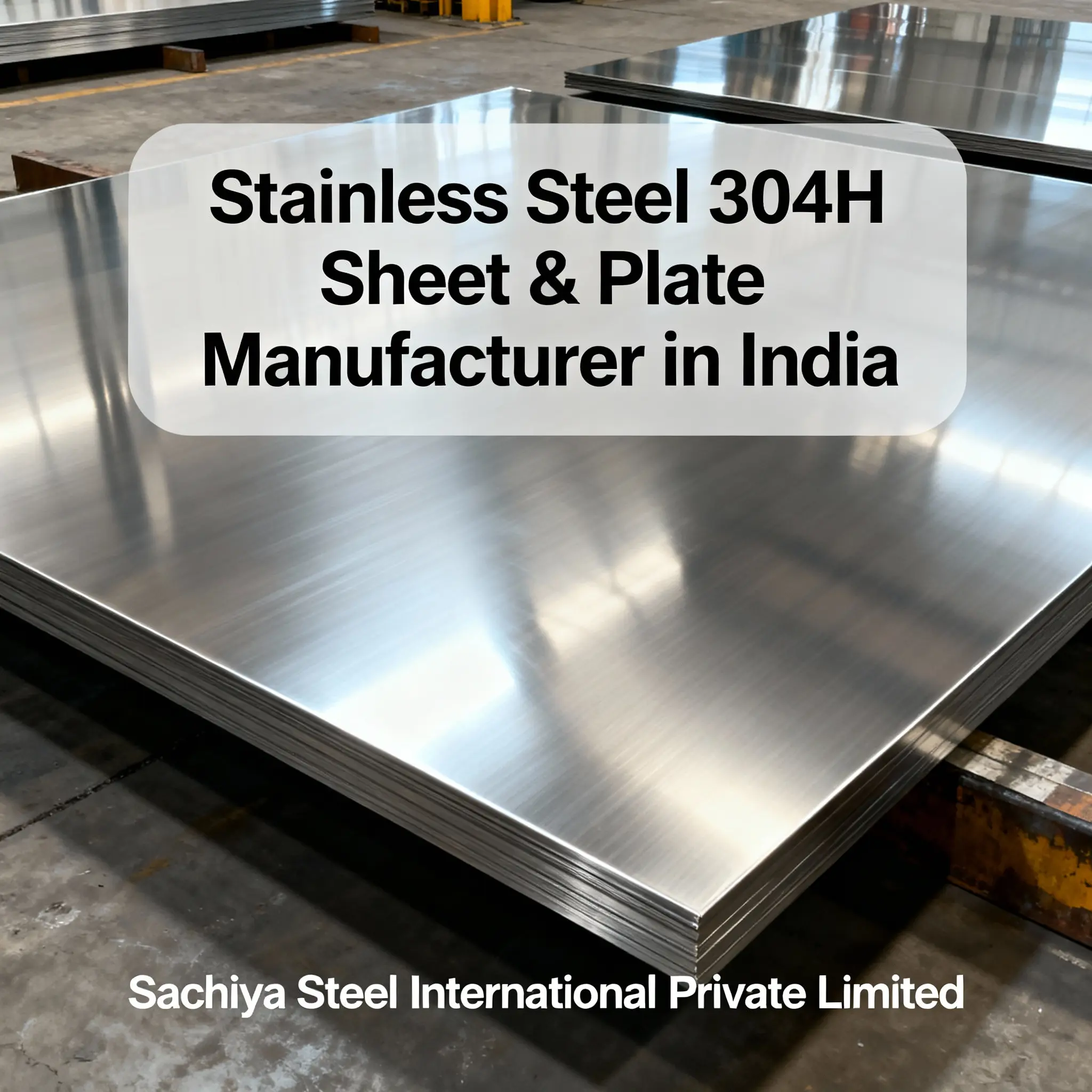
Stainless Steel 304H Sheet & Plate Manufacturer in India

By |2025-10-06T15:37:23+05:30October 6th, 2025|Plates, Sheets, Stainless Steel|

Stainless Steel 304H Sheet & Plate Manufacturer in India: Sachiya Steel International Private Limited

Sachiya Steel International Private Limited is one of India’s leading manufacturers and exporters of high-quality Stainless Steel 304H Sheet & Plate. With a commitment to providing the best products and customer satisfaction, we have earned a trusted reputation for delivering superior stainless steel solutions to various industries. Whether you’re looking to buy SS304H plate or explore its applications, corrosion resistance, and mechanical properties, this article covers everything you need to know about Stainless Steel 304H plates.

What is Stainless Steel 304H Plate?

Stainless Steel 304H is a higher carbon version of SS304, specifically designed to provide higher strength at elevated temperatures. It is an austenitic stainless steel alloy, renowned for its excellent resistance to corrosion, heat, and oxidation. The SS304H plate is extensively used in industries that require high strength and durability, such as power plants, chemical processing, food processing, and construction.

Applications of SS304H Plate

The versatility of SS304H plates makes them ideal for several high-demand applications:

  • Heat exchangers and boilers: The ability to withstand elevated temperatures makes SS304H plates perfect for heat exchangers, reactors, and boiler systems.

  • Pressure vessels: SS304H is commonly used for manufacturing pressure vessels due to its mechanical strength at high temperatures.

  • Chemical and petrochemical industries: SS304H’s resistance to oxidation and corrosion makes it a reliable choice for pipes, fittings, and equipment in the chemical industry.

  • Food processing and pharmaceuticals: The high resistance to corrosion ensures that SS304H is used in food-grade equipment and pharmaceutical manufacturing.

Stainless Steel 304H Sheet & Plate Manufacturer in India

Corrosion Resistance of SS304H

One of the primary reasons SS304H stainless steel plates are preferred in various industries is their excellent corrosion resistance. The high chromium content, along with nickel, makes 304H plates highly resistant to rust and oxidation, even in aggressive environments. It is particularly resistant to:

  • Acids such as sulfuric acid and phosphoric acid.

  • Chlorides, making it a good choice for marine environments.

  • High temperatures and oxidation in outdoor applications.

Difference Between SS304H and SS304

Both SS304H and SS304 are part of the austenitic stainless steel family, but there are key differences between the two:

  • Carbon Content: The most significant difference lies in the carbon content. SS304H contains a higher percentage of carbon (0.04% to 0.10%) compared to SS304 (0.08% maximum). This increase in carbon enhances its strength at high temperatures.

  • Heat Resistance: SS304H plates have better heat resistance than SS304 plates, making SS304H a preferred option for high-temperature applications.

  • Mechanical Properties: SS304H offers superior strength and mechanical properties at elevated temperatures when compared to SS304.

Properties of SS304H Plate

SS304H plates possess remarkable properties, making them one of the best options for high-performance applications:

  • High Strength: The added carbon content provides increased strength, especially at temperatures above 500°C.

  • Durability: Excellent mechanical properties, ensuring long-term durability in harsh conditions.

  • Ductility: SS304H maintains its ductility even under extreme conditions.

  • Weldability: This material has good weldability, making it easy to work with during fabrication.

SS304H Chemical Composition

The chemical composition of SS304H plates typically includes the following elements:

  • Chromium: 18-20%

  • Nickel: 8-12%

  • Carbon: 0.04-0.10%

  • Manganese: 2.0%

  • Silicon: 0.75%

  • Phosphorus: 0.045% max

  • Sulfur: 0.03% max

These elements give SS304H its excellent strength, resistance to corrosion, and high-temperature stability.

SS304H Mechanical Properties

The mechanical properties of SS304H plates are critical for their use in high-temperature and high-stress environments:

  • Tensile Strength: 520 MPa minimum

  • Yield Strength: 205 MPa minimum

  • Elongation: 40% minimum

  • Hardness: Brinell hardness of 201 HB

These properties ensure SS304H plates remain durable and stable under mechanical stress and elevated temperatures.

SS304H Plate Equivalent Grades

When looking for SS304H plates, it is essential to know their equivalent grades in different standards:

  • AISI 304H (American)

  • UNS S30409 (Unified Numbering System)

  • EN 1.4948 (European Standard)

  • DIN 1.4948 (German Standard)

  • JIS SUS 304H (Japanese Standard)

SS304H Plate Heat Resistance

One of the standout features of SS304H plates is their heat resistance. These plates can perform well at temperatures up to 870°C in intermittent service and 925°C in continuous service. This high-temperature resistance makes SS304H an ideal choice for applications like boilers, heat exchangers, and furnaces.

SS304H Plate Industry Standards

At Sachiya Steel International Private Limited, we ensure that all our SS304H stainless steel plates adhere to the highest industry standards. We comply with:

  • ASTM A240

  • ASTM A312

  • ASTM A554

  • ASME SA240 These standards ensure that every SS304H plate is of the highest quality and suitable for critical applications.

SS304H Plate Manufacturing Process

The manufacturing process of SS304H plates involves the following stages:

  • Hot Rolling: The material is passed through rollers at high temperatures to form a flat plate.

  • Annealing: After rolling, the plates are heat-treated to reduce hardness and improve ductility.

  • Pickling: To remove scales and impurities, the plates undergo an acid cleaning process.

  • Cold Rolling: In some cases, cold rolling is used to further refine the thickness and finish of the plates.

SS304H Plate Price

The price of SS304H plates varies depending on factors such as size, thickness, and quantity. To get an accurate price quote for SS304H plates, it’s best to contact a reliable supplier like Sachiya Steel International Private Limited. We offer competitive pricing for SS304H plates, ensuring that our customers get the best value for their investment.

SS304H Plate Specifications and Thickness

The specifications of SS304H plates can include:

  • Thickness: From 1mm to 150mm (custom thicknesses are available)

  • Width: From 1000mm to 2500mm

  • Length: Custom lengths available upon request

These plates can be customized to meet specific requirements for various applications.

SS304H Plate Suppliers and Welding

Sachiya Steel International Private Limited is one of the most trusted SS304H plate suppliers in India. We also provide welding solutions for SS304H plates, ensuring that they are welded using the right techniques to maintain their strength and integrity. Whether you need to weld SS304H plates or require ready-made welded components, we offer comprehensive solutions to suit your needs.

SS304H Plate Versus SS304L

While SS304L offers better weldability due to its low carbon content, SS304H is better suited for high-temperature applications because of its higher carbon content. For applications involving extreme heat, SS304H plates are the preferred choice.

SS304H Plate Weight Calculator

To help you estimate the weight of SS304H plates, you can use a simple plate weight calculator that factors in the thickness, length, and width of the plate. This allows for accurate material estimation for your projects.

For example, let’s assume you need a SS304H plate that is:

  • Length: 2 meters (2000mm)

  • Width: 1 meter (1000mm)

  • Thickness: 10mm

Using the formula for calculating the weight of stainless steel plates:

Where the density of SS304H is approximately 7.93 g/cm³.

So, substituting the dimensions:

Weight=2000mm×1000mm×10mm×7.93g/cm

First, we need to convert the units to cm:

  • Length = 2000mm = 200cm

  • Width = 1000mm = 100cm

  • Thickness = 10mm = 1cm

Now, calculate the weight:

Weight=200×100×1×7.93g=158600grams=158.6kg

So, the weight of this SS304H plate is approximately 158.6 kg.

Conclusion

At Sachiya Steel International Private Limited, we take pride in being India’s leading Stainless Steel 304H Sheet & Plate Manufacturer and exporter. Our SS304H plates are trusted worldwide for their strength, heat resistance, and exceptional corrosion resistance. Whether you’re looking to buy SS304H plates, need assistance with welding, or want to explore custom SS304H plate thickness, our team is ready to assist you.

Contact us today for the best prices, quality, and service for SS304H plates.

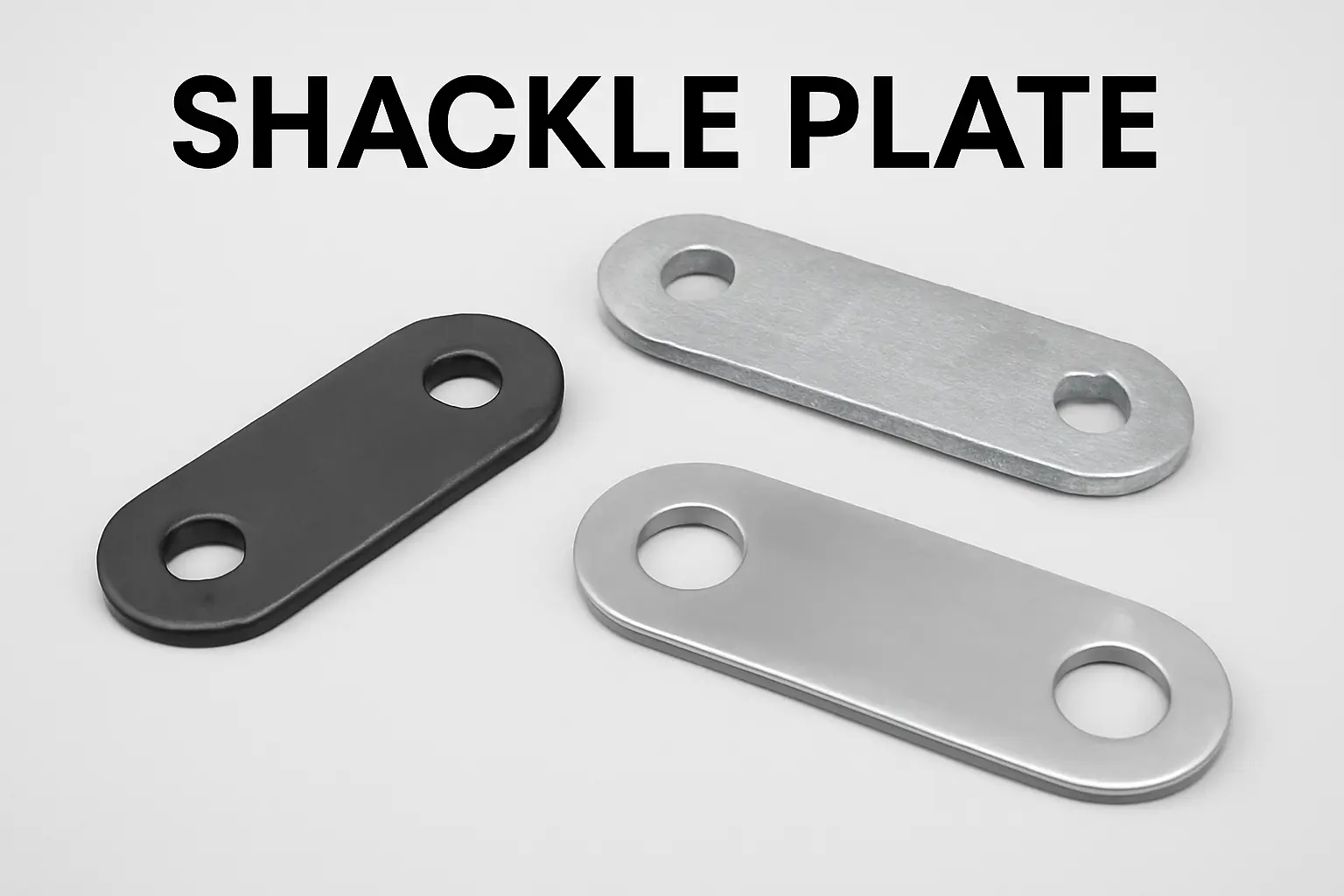
Shackle Plate Manufacturers in India

By |2025-10-06T18:24:23+05:30October 3rd, 2025|Plates|

Shackle Plate Manufacturers in India: Leading the Industry with Sachiya Steel International

When it comes to high-quality Shackle Plates and SS Shackle Plates, Sachiya Steel International Private Limited stands as the leading manufacturer and exporter in India. Our company offers premium, durable, and highly reliable shackle plates used in various lifting, securing, and transportation applications across industries. With years of expertise, we specialize in crafting products that meet international standards of quality and strength.

What Are Shackle Plates?

Shackle plates are critical components of the shackle assembly, which is commonly used in lifting operations. These plates play an essential role in securing heavy loads during lifting, towing, and transportation processes. Typically made of high-strength materials, they offer the necessary support and stability to lifting systems. As Shackle Plate Manufacturers in India, we understand the significance of delivering products that offer the utmost safety and durability.

At Sachiya Steel International, we provide high-quality Shackle Plates that are designed to handle heavy-duty lifting operations with ease, ensuring the safety and efficiency of your operations.

Types of Shackle Plates We Manufacture

  1. Mild Steel Shackle Plates Our mild steel shackle plates are known for their reliability and cost-effectiveness. They are ideal for general-purpose applications in industries such as construction and logistics.

  2. Stainless Steel Shackle Plates (SS Shackle Plates) As leading SS Shackle Plate Manufacturers in India, we specialize in manufacturing stainless steel shackle plates. These plates are corrosion-resistant, offering superior strength and long-lasting durability, especially in harsh environments such as marine, chemical, and offshore industries.

  3. Hot-Dip Galvanized Shackle Plates For enhanced corrosion protection, we offer hot-dip galvanized shackle plates. This added layer of galvanization helps protect against rust and weather conditions, making them suitable for outdoor and marine applications.

  4. Customized Shackle Plates Understanding that industries have unique requirements, we also provide customized shackle plates. Whether it’s the material, size, or design, we work closely with our clients to deliver tailored solutions that meet their specific needs.

Shackle Plate Manufacturers in India

Why Choose Sachiya Steel International for Shackle Plates?

  1. Unmatched Quality At Sachiya Steel International, we prioritize the quality of our products. We manufacture shackle plates using high-grade materials and adhere to rigorous testing processes, ensuring durability, strength, and performance. Our SS Shackle Plates are engineered for both heavy-duty and specialized applications, providing exceptional load-bearing capabilities.

  2. Global Exporter As one of India’s premier Shackle Plate Manufacturers, we have successfully exported our products to over 50 countries, including the USA, Canada, UK, Germany, and Australia. Our extensive export network and international clients trust us for our consistent quality and timely delivery.

  3. Customization Options We understand that different industries have different demands. Our team offers a wide range of customizable options for shackle plates, including variations in size, material, load capacity, and surface finish. Whether you’re looking for a mild steel variant or a high-strength stainless steel plate, we’ve got you covered.

  4. Competitive Pricing We offer Shackle Plates at competitive prices without compromising on quality. Our efficient production methods, combined with our established supply chain, enable us to deliver cost-effective solutions for both small and large-scale projects.

  5. Expert Technical Support We pride ourselves on offering exceptional customer service. Our team of technical experts is always available to help you choose the right shackle plate for your application. We ensure that all our clients receive the necessary guidance to meet their lifting and securing needs effectively.

Technical Specifications of Our Shackle Plates

  • Material Options: Mild Steel, Stainless Steel (SS), Hot-Dip Galvanized Steel

  • Tensile Strength: High tensile strength, with customization options up to 1000 MPa

  • Finish: Galvanized, powder-coated, or painted finishes available

  • Custom Sizes: Available in a wide range of sizes, or customized to client specifications

  • Load Capacity: Customizable to meet different lifting requirements

  • Corrosion Resistance: Stainless Steel and Galvanized options offer superior protection

  • Industry Compliance: Meets international standards such as ASTM, ISO, and BS

Applications of Shackle Plates

Shackle plates are essential components in various industries, including:

  • Construction: Used for lifting construction materials such as steel beams, concrete blocks, and heavy machinery.

  • Marine: Vital for securing cargo, anchor chains, and mooring lines in maritime operations.

  • Mining: Used for lifting heavy mining equipment, machinery, and tools.

  • Oil and Gas: Required for securing pipes, pumps, and other essential equipment.

  • Shipping & Logistics: Used to secure shipping containers and cargo during transportation.

Quality Assurance at Sachiya Steel International

At Sachiya Steel International, we employ strict quality control measures to ensure the highest standards of product performance and safety. From material selection to the final inspection, every stage of production is closely monitored. Our commitment to quality is reflected in the certifications we hold, including ISO 9001:2015, ensuring our products meet both national and international standards.

Get in Touch with Sachiya Steel International Today

If you’re looking for Shackle Plate Manufacturers in India that offer exceptional quality, reliability, and competitive pricing, look no further than Sachiya Steel International Private Limited. We are your trusted partner for all your shackle plate needs. Contact us today for more information or to request a quote.


Conclusion

As one of the top Shackle Plate Manufacturers in India, Sachiya Steel International Private Limited offers superior products designed to meet the demands of industries that require heavy-duty, reliable, and safe lifting solutions. Our wide range of products, including SS Shackle Plates, mild steel variants, and customized options, ensures that we can provide solutions for any application. Our global customer base and strong reputation for quality and reliability make us the ideal choice for all your shackle plate needs.

Hot Dip Galvanized Serrated Grating Panel Manufacturers India

By |2025-09-29T15:56:45+05:30September 29th, 2025|Grating Panel|

Hot Dip Galvanized Serrated Grating Panel Manufacturers India | Sachiya Steel International Private Limited

Sachiya Steel International Private Limited is a leading manufacturer and exporter of hot dip galvanized serrated grating panels in India, supplying anti‑slip, corrosion‑resistant bar grating for industrial flooring, walkways, platforms, stair treads, and trench covers.

Why serrated HDG grating

Hot dip galvanized serrated grating combines the long‑life protection of a bonded zinc coating with a tooth‑profiled bearing bar that improves traction in wet, oily, or outdoor conditions.
The result is robust, low‑maintenance flooring and access systems with excellent drainage, ventilation, and slip resistance across harsh industrial environments.

What it is

Serrated grating is a steel bar grating panel where the bearing bar edges are machined or rolled with serrations to increase friction underfoot.
After fabrication, panels are hot dip galvanized so zinc metallurgically bonds to steel, shielding edges, welds, and cut areas better than most paint systems.

Manufacturing at Sachiya Steel International

  • Raw materials: Carbon steel to common project grades such as IS 2062 (E250/E350) or equivalent on request; stainless grades available for special environments.

  • Process: Electro‑forged (pressure‑welded) or fabricated grating with serrated bearing bars, cross bars, banding bars, and edge trims as per drawings.

  • Galvanizing: Hot dip galvanizing to recognized standards (e.g., ISO 1461/ASTM A123/IS 4759 equivalents specified by contract) for durable zinc coatings and robust edge protection.

  • QA/QC: Dimensional checks, weld integrity review, coating thickness measurement, visual inspection, and marking/traceability per approved QAP.

Hot Dip Galvanized Serrated Grating Panel Manufacturers India

Typical sizes and options

  • Bearing bar sizes: Common starting profiles include 25×3, 25×5, 30×5, 32×5, 40×5, 50×5 mm; heavier bars available for higher load classes.

  • Pitches: Bearing bar pitch typically 30 mm or 40 mm; cross bar pitch 50 mm or 100 mm; other meshes on request.

  • Standard panels: Frequently produced around 1000–1200 mm width and up to 6000 mm length for layout efficiency; custom cut‑to‑fit supplied against drawings.

  • Surfaces: Serrated (anti‑slip) or plain; stair treads with checker/nosing plates; toe plates, kick plates, and frames available.

  • Materials/finish: Self‑color, painted, or hot dip galvanized; stainless options for specialty applications.

Comparison snapshots

Feature Serrated grating Plain grating
Slip resistance Higher traction in wet/oily areas Standard traction for dry zones
Preferred use Platforms, catwalks, stairs, outdoor Clean rooms, light traffic, indoor
Cost vs. benefit Slightly higher cost, higher safety Lower initial cost, standard safety
Feature Electro‑forged Fabricated (hand‑welded)
Consistency Highly uniform welds Flexible for small batches/cut‑outs
Throughput High production efficiency Suited for complex custom pieces
Aesthetics Clean lines, repeatable quality Dependent on manual workmanship

Engineering benefits

  • Safety: Serrations add multiple micro‑edges that bite under footwear, reducing slip incidents on stairs, platforms, and ramps.

  • Durability: Hot dip galvanizing offers long service life versus paint in coastal, chemical, and outdoor atmospheres, including abrasion and handling during installation.

  • Performance: Open area improves drainage, airflow, and housekeeping, lowering stagnant liquid risks and minimizing buildup.

Where it’s used

  • Oil and gas, chemicals, and power generation platforms, including pipe racks, maintenance decks, and access walkways.

  • Water and wastewater plants, desalination facilities, and coastal infrastructure with aggressive corrosion exposure.

  • Metro, ports, bridges, industrial sheds, and public works requiring anti‑skid, low‑maintenance access systems.

Standards and compliance supported

  • Galvanizing: ISO 1461/ASTM A123/IS 4759 or client‑specified equivalents, with coating thickness checks as per standard.

  • Bar grating: NAAMM MBG 531, BS 4592, or project‑specified guides; base steel to IS 2062/ASTM equivalents as required.

  • Documentation: EN 10204 type 3.1 MTCs, galvanizing certificates, and third‑party inspection when specified.

Accessories and fixing

  • Clamps: Saddle clips, J‑bolts, and hold‑down systems to secure panels without welding to supporting steel.

  • Edging and frames: Banding bars, toe plates, and trench frames for safe load transfer and neat finishes.

  • Fasteners: Coated or stainless fasteners to match corrosion category and inspection preferences.

Packaging and logistics

  • Export‑ready: Palletized, strapped, edge‑protected bundles with panel maps and heat/lot traceability.

  • Marking: Itemized tagging per drawing and packing list for quick field identification and installation.

  • Dispatch: Consolidation from India with flexible INCOTERMS, project‑based delivery schedules, and port operations aligned to timelines.

Quality assurance

  • Dimensional and mesh verification against drawings, including bearing/cross bar pitches and tolerances.

  • Coating thickness measurement after HDG, with repair protocol for cut edges or site modifications as specified.

  • Optional load testing and slip resistance validation based on project criteria.

Ordering checklist

  • Material grade, surface type (serrated/plain), and finish (HDG preferred for corrosion).

  • Bearing bar size and pitch, cross bar pitch, panel size, and any toe plates, nosing, or frames.

  • Drawings for cut‑outs around pipes, columns, and equipment; clamp type and quantity.

  • Standards to comply with; documentation set (MTC 3.1, galvanizing certs); inspection and delivery terms.

Installation notes

  • Panels should be laid to panel map, oriented with bearing bars spanning supports to design span.

  • Use specified clamps at recommended spacing; avoid field welding unless approved by the coating/structural specification.

  • After any site cutting, apply an approved zinc‑rich repair coating as per project specification.

Why Sachiya Steel International

Sachiya Steel International Private Limited combines high‑throughput electro‑forged capacity with bespoke fabrication, enabling rapid supply of standard panels and complex, drawing‑based grating packages.
End‑to‑end execution includes technical support, optimized nesting to reduce wastage, stringent QA, export documentation, and reliable dispatch windows for shutdowns and fast‑track projects.

Specification Table

Parameter Typical options
Bearing bars 25×3, 25×5, 30×5, 32×5, 40×5, 50×5 mm
Bearing bar pitch 30 mm, 40 mm
Cross bar pitch 50 mm, 100 mm
Surface Serrated (anti‑slip) or plain
Panel size Up to ~1000–1200 mm width × up to ~6000 mm length
Finish Hot dip galvanized (preferred), painted, self‑color
Accessories Saddle clips, J‑bolts, banding bars, toe plates, nosing
Documentation MTC 3.1, galvanizing certificate, packing list, QC reports

FAQs

  • What makes serrated grating safer than plain?
    Serrations create additional contact edges that enhance friction, significantly reducing slip risk on wet or oily surfaces.

  • Is hot dip galvanizing better than paint?
    Yes, hot dip galvanizing metallurgically bonds zinc to steel, protecting welds and edges and delivering longer service life in aggressive environments.

  • Can panels be supplied cut to drawings?
    Yes, panels are nested and cut to drawing, with banding, toe plates, cut‑outs, and frames integrated for ready installation.

  • Which standards can be met?
    Commonly requested are ISO 1461/ASTM A123/IS 4759 for galvanizing and NAAMM MBG 531/BS 4592 for grating; base steel per IS 2062 or equivalent.

  • How are panels fixed without welding?
    Use saddle clips or hold‑down clamps at recommended spacing to lock panels to support members while preserving coatings.

Stainless Steel Fender Washer Manufacturer in India

By |2025-09-20T13:30:24+05:30September 20th, 2025|Fasteners|

Stainless Steel Fender Washer Manufacturer in India – Sachiya Steel International Private Limited

When it comes to fastening solutions, washers play a key role in securing bolts and screws while protecting the surface material from damage. One highly reliable washer is the Stainless Steel Fender Washer. These washers are widely used in various industries, particularly automotive, construction, and manufacturing, due to their superior strength and resistance to wear. Sachiya Steel International Private Limited stands out as India’s leading Stainless Steel Fender Washer Manufacturer, offering premium washers like the M6 Fender Washer for customers across the globe.

What is a Stainless Steel Fender Washer?

A Fender Washer is a type of washer with a much larger outside diameter (OD) compared to its inner diameter (ID). This large diameter helps spread the load of a bolt or screw over a larger area, which is especially important when fastening materials that are soft or prone to damage, such as thin sheet metal or wood. Stainless Steel Fender Washers are made of stainless steel, making them corrosion-resistant and durable in harsh environments.

A M6 Fender Washer is a specific type of fender washer designed to fit with M6 bolts and screws. These washers are commonly used when a larger surface area is needed to distribute the load, ensuring a stronger hold and preventing any damage to the base material.

Sachiya Steel International Private Limited – Leading Manufacturer and Exporter

At Sachiya Steel International Private Limited, we are proud to be India’s top manufacturer and exporter of Stainless Steel Fender Washers. We specialize in producing washers that meet the highest international standards for quality and performance. With years of experience in the industry, we offer washers in a variety of sizes, including M6 Fender Washers, M8 Fender Washers, M10 Fender Washers, and more, to suit a wide range of applications.

Our M6 Fender Washers are one of our most popular products, designed to offer reliable performance in automotive, construction, and manufacturing sectors. Whether you need a custom washer size or a standard product, we provide flexible solutions to meet your needs.

Stainless Steel Fender Washer Manufacturer in India

Technical Details of Stainless Steel Fender Washers

Material: Our Stainless Steel Fender Washers are made from premium-grade stainless steel, offering a combination of strength, corrosion resistance, and durability. The most common stainless steel grades used for these washers include:

  • 304 Stainless Steel: Excellent resistance to corrosion, making it ideal for both indoor and outdoor applications.

  • 316 Stainless Steel: Provides enhanced resistance to corrosion in more aggressive environments like marine and chemical industries.

  • 410 Stainless Steel: Known for its high strength and hardness, used for applications requiring wear resistance.

Size and Dimensions: We offer a wide range of sizes to meet various application requirements:

  • Outer Diameter (OD): The outer diameter of the fender washer is typically much larger than the inner diameter, ranging from 10mm to 100mm, depending on the bolt size.

  • Inner Diameter (ID): The inner diameter (ID) is designed to accommodate specific bolts or screws, with M6 being one of the most common sizes.

  • Thickness: The thickness of the washer depends on its size, typically ranging from 1mm to 5mm.

Tolerance: Our washers are manufactured with high precision to ensure the correct fit and performance. The standard tolerance ranges are:

  • Outer Diameter: ±0.5mm

  • Inner Diameter: ±0.2mm

  • Thickness: ±0.2mm

Corrosion Resistance: Stainless steel’s resistance to rust, corrosion, and tarnishing makes it an ideal material for use in wet or high-humidity environments. Our fender washers are specifically designed to resist the wear and tear caused by exposure to moisture, chemicals, or harsh weather conditions.

Why Choose Sachiya Steel International Private Limited for Your Stainless Steel Fender Washers?

  1. Premium Quality Manufacturing: We are committed to delivering only the highest quality Stainless Steel Fender Washers. Our products are manufactured using cutting-edge technology and undergo rigorous quality checks to ensure they meet global standards.

  2. Custom Sizes and Specifications: We understand that each application is unique. That’s why we offer washers in various sizes and thicknesses, including custom orders. If you need a specific M6 Fender Washer or a customized washer, we can manufacture it to your exact specifications.

  3. Durability and Reliability: Our Stainless Steel Fender Washers are designed to withstand harsh environments, offering long-lasting performance. Whether used in automotive, construction, or marine applications, our washers offer excellent load distribution, durability, and rust resistance.

  4. Competitive Pricing: We believe in providing excellent value for our customers. By optimizing production processes, we offer our washers at competitive prices without compromising on quality.

  5. International Export Capabilities: We are a trusted supplier to customers worldwide. Our efficient logistics network ensures that our washers are delivered on time, no matter where you are located. We are proud to export our products to countries across North America, Europe, the Middle East, and Asia.

Common Applications of Stainless Steel Fender Washers

Due to their robust design, Stainless Steel Fender Washers are used in various industries for both industrial and consumer applications:

  • Automotive Industry: Fender washers are used to secure components and prevent surface damage in vehicles.

  • Construction Industry: These washers are commonly used in construction for heavy-duty fastening where high strength is required.

  • Marine Industry: Stainless steel washers are ideal for marine environments due to their resistance to saltwater corrosion, making them suitable for boats and ships.

  • Manufacturing: Fender washers are used in manufacturing for fastening parts, especially where weight distribution is important.

Advantages of Using Stainless Steel Fender Washers

  1. Corrosion Resistance: Stainless steel fender washers are highly resistant to rust and corrosion, making them perfect for use in both indoor and outdoor applications, especially in wet or humid environments.

  2. Strength and Durability: Stainless steel provides superior strength, which ensures that the washers can handle heavy-duty applications and resist deformation under pressure.

  3. Increased Surface Area: The larger outer diameter of the Stainless Steel Fender Washer allows for better load distribution, preventing damage to the surface material. This makes them ideal for applications involving soft or thin materials.

  4. Aesthetic Appeal: Stainless steel washers have a shiny, clean finish, making them ideal for visible installations where aesthetics matter.

  5. Longevity: Due to their high resistance to corrosion and wear, stainless steel fender washers last longer than other types of washers, offering more value for money.

Sachiya Steel International Private Limited is your trusted source for high-quality Stainless Steel Fender Washers in India. As a leading manufacturer and exporter, we take pride in producing durable, reliable, and corrosion-resistant washers for a variety of applications. Whether you need an M6 Fender Washer or customized sizes, we provide top-notch products tailored to your needs.

Contact us today to get the best deals on Stainless Steel Fender Washers and other fasteners!

Go to Top