
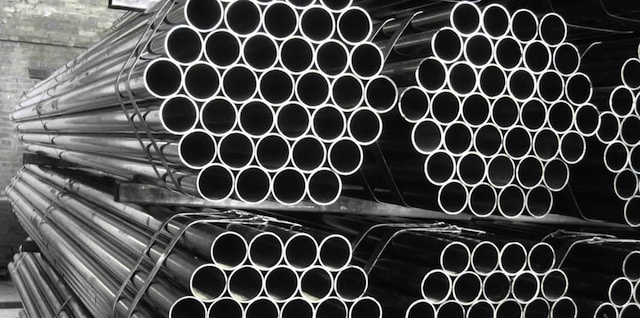
ms erw pipe

MS ERW Pipe Manufacturers In Benin

MS ERW Pipe Manufacturers In Benin

MS ERW pipes play an essential part in industrial steel products, thanks to their versatility, durability, and cost-effectiveness. Used across sectors ranging from construction and infrastructure to automotive and agriculture. This comprehensive guide seeks to explore all aspects of MS ERW pipes from their manufacturing process, chemical and mechanical properties, standards compliance compliance applications as well as leading manufacturers such as Sachiya Steel International Private Limited.

Introduction to MS ERW Pipes

MS ERW pipes are constructed using low-carbon (mild) steel strips which are cold formed into cylindrical shapes before being longitudinally welded using electric resistance welding technology, producing uniform wall thickness and diameter without gaps between wall layers, making these ideal for conveying fluids under varied pressure conditions. Their popularity among various industries stems from being affordable, easy to install and long lasting – qualities which make MS ERW pipes highly valued products.

Manufacturing Process of MS ERW Pipes

The production process for MS ERW pipes includes several steps.

  • Raw Material Selection: High-grade mild steel strips are selected based on their chemical and mechanical properties, usually to standards such as ASTM A36 or IS 1239 or equivalent.
  • Forming: Cold-formed steel strips are cold-formed into cylindrical forms using rollers, which ensure that their edges are aligned for welding purposes.
  • Welding: Electric Resistance Welding (ERW) is used to join together longitudinal edges of formed strips using electric current, heating them until they fuse without filler material and are then normalized to release any residual stresses in the seam.
  • Sizing and Straightening: After being welded into place, welded pipes require both sizing to achieve their desired dimensions and straightening with rollers to meet straightness tolerance requirements.
  • Cutting and Testing: After cutting pipes to their specified lengths, each one undergoes rigorous tests such as hydrostatic testing, nondestructive (such as ultrasonic testing), and dimensional inspection to ensure it satisfies quality standards. Testing typically includes hydrostatic pressure testing, non-destructive (such as ultrasonic testing), and dimensional inspection.

Chemical Composition of MS ERW Pipes

The chemical composition of MS ERW pipes typically includes the following elements:

Carbon (C): Typically less than 0.25%.
Manganese (Mn): Usually between 0.60% to 1.50%.
Phosphorus (P): Maximum 0.040%.
Sulfur (S): Maximum 0.040%.

The exact composition may vary depending on the standards and specifications required by the end-user or application.

Mechanical Properties of MS ERW Pipes

The mechanical properties of MS ERW pipes are crucial for their performance in various applications. These properties are tested in accordance with relevant standards such as ASTM, IS, or equivalent:

Tensile Strength: Typically ranging from 330 MPa to 450 MPa.
Yield Strength: Generally around 210 MPa to 360 MPa.
Elongation: Usually 20% to 25%.
Hardness: Often specified in terms of Rockwell hardness (HRB or HRC).

The mechanical properties ensure that MS ERW pipes can withstand the stresses imposed during installation, operation, and maintenance in different environments.

Standards and Specifications
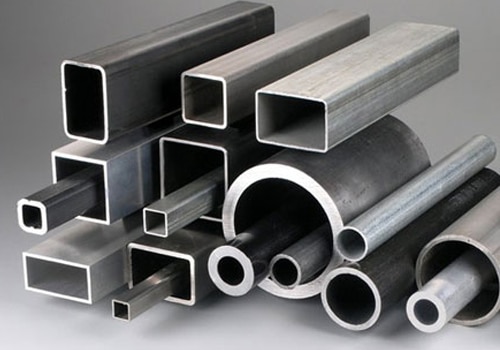
MS ERW Pipe

Sachiya Steel International MS ERW pipes manufactured by reputable companies such as Sachiya Steel International meet international standards such as:

ASTM A53: Standard Specification for Pipe, Steel, Black and Hot-Dipped Zinc-Coated Welded and Seamless Pipe. IS 1239 (Part 1): Mild Steel Tubes Tubulars and Other Wrought Steel Fittings Specification.

These standards ensure that pipes meet dimensional, mechanical, and chemical specifications suitable for their intended uses.

Applications of MS ERW Pipes

MS ERW pipes find extensive applications across various industries and sectors:

  • Construction: Used in structural applications such as columns, beams, and purlins.
  • Infrastructure: Suitable for water pipelines, drainage systems, and sewage lines.
  • Automotive: Utilized in exhaust systems and chassis components.
  • Oil and Gas: Used for conveying petroleum and natural gas.
  • Agriculture: Employed in irrigation systems and sprinkler pipes.
  • General Engineering: Used in the manufacture of furniture, scaffolding, and fencing.

The versatility of MS ERW pipes makes them indispensable in modern infrastructure development and industrial applications.

Leading Manufacturer: Sachiya Steel International Private Limited

Sachiya Steel International Private Limited of India is an award-winning manufacturer and supplier of MS ERW pipes. Recognized for their commitment to quality and customer satisfaction, Sachiya Steel offers an expansive selection of MS ERW pipes in various sizes, thicknesses, specifications and lengths; their manufacturing facilities boast state-of-the-art machinery which guarantees consistency quality precision with every product they manufacture.

Advantages of Choosing Sachiya Steel International

  • Quality Assurance: Stringent quality control measures ensure that each MS ERW pipe meets international standards and customer specifications.
  • Customization: Sachiya Steel International offers customization options for MS ERW pipes, including dimensions, coatings, and end finishes to meet specific project requirements.
  • Global Reach: With a strong distribution network, Sachiya Steel International serves clients not only in India but also in Benin and other global markets, ensuring timely delivery and support.
  • Commitment to Sustainability: Sachiya Steel International prioritizes sustainable manufacturing practices, minimizing environmental impact and promoting eco-friendly solutions.

MS ERW pipes produced by Sachiya Steel International Private Limited play an essential part in the infrastructure and industrial development of countries such as Benin. Due to their cost-effectiveness, durability, and straightforward installation process they are an ideal choice across various fields: from construction to oil and gas exploration or automotive use; MS ERW pipes ensure performance with reliability.

As industries expand and change, demand for high-quality MS ERW pipes will only continue to increase. Sachiya Steel International stands ready to meet this demand with innovative solutions and its unwavering dedication to excellence. Businesses in Benin seeking MS ERW pipes should partner with an established manufacturer for maximum reliability and peace of mind.

Make your projects successful with MS ERW pipes from manufacturers who prioritize quality and customer satisfaction, like Sachiya Steel International. Their wide variety of MS ERW pipes is sure to meet all your specific requirements and help advance success in any industry. Contact Sachiya Steel International now and explore how their range can meet those criteria – they could just be what’s missing from your success in business!
By |2024-06-21T12:26:48+05:30June 21st, 2024|Pipes|

MS Pipe Weight Chart In KG (2025)

MS Pipe Weight Chart In KG (2025)

Introduction to Mild Steel Pipe

Mild Steel Pipe, often referred to as MS Pipe, is a type of low carbon steel pipe renowned for its excellent strength, ductility, and ease of fabrication. As a versatile material, mild steel pipe is widely used across various industries, including water supply systems, structural construction, mechanical engineering, and general fabrication. The low carbon content in MS pipes makes them easy to weld and form, while still providing the durability required for demanding applications. Whether used in water supply, oil and gas, or as a structural element, MS pipes offer a reliable and cost-effective solution. Understanding the unique properties and broad applications of mild steel pipe is essential for selecting the right material for your project, ensuring both performance and longevity.

Classification of MS Pipe

MS pipes are categorized based on their nominal bore (NB) and wall thickness, which are standardized to meet diverse industry requirements. The classification system helps users select the appropriate pipe for their specific needs, balancing weight, strength, and cost. The most common classifications are Class A (Light), Class B (Medium), and Class C (Heavy). Class A pipes have thinner walls and are lighter, making them suitable for low-pressure applications. Class B pipes offer a medium wall thickness, providing a balance between strength and weight, while Class C pipes feature the thickest walls, delivering maximum strength and durability for heavy-duty and high-pressure uses. Choosing the correct class ensures that the ms pipes will perform optimally in their intended application, whether for water supply, structural support, or industrial use.

MS Pipe Size and Dimensions

MS pipes are available in a wide range of sizes, defined primarily by their outer diameter (OD) and nominal bore (NB). The pipe size and dimensions are crucial factors that determine the pipe’s weight, pressure rating, and suitability for various applications. Wall thicknesses can vary to meet different strength and durability requirements, directly impacting the weight per meter of the pipe. Standard ms pipe sizes typically range from 15mm to 150mm in nominal bore, with corresponding variations in wall thickness and outer diameter. Accurate knowledge of ms pipe sizes, wall thickness, and dimensions is essential for calculating the weight per meter, estimating material requirements, and ensuring the pipe meets the necessary pressure rating for your project. This information is vital for engineers and contractors when planning construction projects, water supply systems, and industrial installations.

MS Pipe Weight Chart In KG (2025)

MS Pipe Weight Chart in KG (2025) with Online Weight Calculator for Accurate Sizing

At Sachiya Steel International, we are leading manufacturers, suppliers, and exporters of high-quality Mild Steel (MS) Pipes in India. Our extensive range includes electric resistance welded (ERW) mild steel pipes/tubes, available in sizes from 1/2 inch N.B. to 14 inch N.B. Among these, 12 NB is a commonly used size in industry applications. Pipe dimensions are often specified in mm OD (millimeter outer diameter) for accuracy. Our product range also includes MS round pipe, which is widely used for structural and engineering purposes. Steel round pipes are available as well, conforming to the same IS: 1239 (Part-1) 2004 and BS: 1387 standards, ensuring reliability for various construction, engineering, and manufacturing applications. Please refer to the table below for detailed weight and dimension data.

Why Use the MS Pipe Weight Chart in KG?

Understanding the weight of mild steel pipes is essential for selecting the right products for your projects. The class pipe weight chart provides detailed information on the weight, dimensions, and tolerances for different classes, including Class C pipes.

For example, a 4-inch mild steel pipe with an outer diameter of 114.3 mm and thickness ranging from 6.02 mm results in a weight of approximately 15.72 kg/m, as reflected in our MS Pipe Weight Chart.

This chart facilitates accurate load calculations, reduces material wastage, and supports cost-effective procurement for architects, engineers, and manufacturers.

MS Pipe Weight Chart in KG (IS 1239 / BS 1387)

Before referring to the chart, note that wall thickness is measured in millimeters (wall thickness mm) for each pipe size. The table below provides weight data for standard circular pipe dimensions commonly used in construction and engineering.

Nominal Bore Outside Diameter (mm) Light (A-Class) Thickness (mm) Weight (kg/m) Medium (B-Class) Thickness (mm) Weight (kg/m) Heavy (C-Class) Thickness (mm) Weight (kg/m)
1/8″ (3 mm) 10.32 1.80 0.361 2.00 0.493 2.65 0.493
1/4″ (6 mm) 13.49 1.80 0.517 2.35 0.769 2.90 0.769
3/8″ (10 mm) 17.10 1.80 0.674 2.35 1.02 2.90 1.02
1/2″ (15 mm) 21.43 2.00 0.952 2.65 1.45 3.25 1.45
3/4″ (20 mm) 27.20 2.35 1.410 2.65 1.90 3.25 1.90
1″ (25 mm) 33.80 2.65 2.010 3.25 2.97 4.05 2.97
1.1/4″ (32mm) 42.90 2.65 2.580 3.25 3.84 4.05 3.84
1.1/2″ (40mm) 48.40 2.90 3.250 3.25 4.43 4.05 4.43
2″ (50 mm) 60.30 2.90 4.110 3.65 6.17 4.47 6.17
2.1/2″ (65mm) 76.20 3.25 5.840 3.65 7.90 4.47 7.90
3″ (80 mm) 88.90 3.25 6.810 4.05 10.1 4.85 10.1
4″ (100 mm) 114.30 3.65 9.890 4.50 14.4 5.40 14.4
5″ (125 mm) 139.70 4.85 16.20 5.40 16.20
6″ (150 mm) 165.10 4.85 19.20 5.40 19.20

Need to Calculate MS Pipe Weight Quickly?

Use our Online Weight Calculator for precise, real-time calculations. Simply input the pipe’s outer diameter, wall thickness, and length, and get the weight per meter instantly.

Use the MS Pipe Weight Calculator

How to Calculate MS Pipe Weight per Meter?

You can calculate the weight of any MS pipe using the following formula:

Weight (kg/m) = 0.02466 × (mm OD − wall thickness mm) × wall thickness mm

  • mm OD: Outside Diameter in millimeters
  • wall thickness mm: Thickness of the pipe wall in millimeters
  • 0.02466: Density constant of mild steel (kg/mm³)

This formula ensures precise weight calculation for efficient material handling and cost estimation.

What is the MS Pipe Weight Chart?

The MS pipe weight chart is an essential resource for professionals who need accurate weights for various pipe sizes and thicknesses. It helps engineers, contractors, and manufacturers choose the right pipe size for their projects, ensuring safety, efficiency, and structural integrity.


Factors Affecting Mild Steel Pipe Weight

  1. Diameter (OD): Larger diameter pipes weigh more due to increased material use.
  2. Wall Thickness (wall thickness mm): Thicker walls, measured in millimeters (wall thickness mm), contain more material, increasing the weight.
  3. Material Density: MS pipes are made from mild steel, which has a specific density that influences weight.

Properties of Class Pipe

The performance and suitability of a class pipe are determined by its key properties, including wall thickness, outer diameter, and material composition. Class pipes are available in several classes—A, B, and C—each designed for specific applications. Class A pipes, with thinner walls, are ideal for light-duty water supply systems, while Class B pipes offer a medium thickness suitable for general construction and moderate pressure applications. Class C pipes, featuring the thickest walls, are engineered for heavy-duty uses such as gas pipelines and high-pressure construction projects. The choice of class pipe depends on the required strength, durability, and pressure rating, as well as the specific demands of the project. Understanding these properties ensures that the selected pipe will deliver reliable performance and long-term value in any application.

MS Pipe Price and Cost

The price of MS pipes is influenced by several factors, including pipe size, wall thickness, class, and the quality of the material used. Heavier pipes with thicker walls and larger diameters generally cost more due to the increased amount of mild steel required. The ms pipe weight chart is a valuable tool for estimating the total material cost, as it allows buyers to calculate the weight per meter and, consequently, the overall price for their project. Market trends, raw material costs, and the reputation of the leading manufacturer also play a significant role in determining ms pipe price. For construction projects and industrial applications, sourcing ms pipes from a trusted supplier ensures not only competitive pricing but also consistent quality and compliance with industry standards. Accurate weight calculation and understanding of class pipe specifications help in making informed purchasing decisions, optimizing both cost and performance.

Applications of MS Pipes

  • Construction: Plumbing, structural supports, water and gas transportation, and oil and gas pipelines.
  • Engineering: HVAC systems, fluid flow pipelines, oil and gas pipelines, and industrial processing.
  • Manufacturing: Fabrication of machinery, tools, and components with guaranteed quality and strength.
  • Infrastructure: Road barriers, fencing, and protective railings.

Large Diameter MS Pipes Weight Chart

Nominal Bore Wall Thickness Weight (kg/mtr)

7″ (193.7 mm)

4.85 mm 22.59
8″ (219.1 mm) 5.20 mm

24.17

10″ (273 mm)

5.60 mm 26.00
12″ (323.7 mm) 6.00 mm

27.88

14″ (355.6 mm)

6.35 mm 29.34
16″ (406.4 mm) 7.01 mm

32.77

Frequently Asked Questions (FAQs)

What is an MS pipe weight calculator?

An MS pipe weight calculator is an online tool that helps you calculate the weight of mild steel (MS) pipes based on their dimensions, such as diameter and thickness, providing accurate results in kilograms

How do I use the MS pipe weight calculator?

To use the MS pipe weight calculator, simply enter the pipe’s outer diameter, wall thickness, and length. The calculator will instantly provide the weight of the pipe in kilograms.

What information do I need to calculate the weight of MS pipes?

To calculate the weight of MS pipes, you will need the pipe’s outer diameter (specified as mm OD), wall thickness in millimeters (wall thickness mm), and length. These measurements will help the calculator provide an accurate weight estimate.

Can I use the MS pipe weight calculator for other types of pipes?

While the calculator is designed for MS (mild steel) pipes, it may also work for other types of pipes if the dimensions are entered accurately. However, for precise weight calculations of other materials, using a dedicated calculator is recommended.

Is the MS pipe weight chart updated regularly?

Yes, our MS pipe weight chart is updated for 2024, ensuring that you have access to the most current data for accurate weight calculations.

Is the MS pipe weight calculator free to use?

Yes, the MS pipe weight calculator is completely free to use. You can calculate the weight of MS pipes anytime without any charges.

Download the Complete MS Pipe Weight Chart PDF

Quickly access and print our comprehensive MS Pipe Weight Chart for offline use and easy sharing:

Download PDF Now


Contact Sachiya Steel International

For premium quality mild steel pipes, tubes, and steel products, contact us today!

Internal Links

Share This Article

By |2025-10-29T18:24:01+05:30January 18th, 2020|Blogs, Weight Chart|
Go to Top